“You’re kidding, right? We’re building a gingerbread house *from scratch* this year?” That’s what my partner said as I pulled out bags of flour and spices one chilly December afternoon. Honestly, I wasn’t sure if it would work either. The last time I tried to assemble a gingerbread house, it looked more like a crumbled disaster zone than a festive masterpiece. But this time, something clicked.
It all started when a whiff of molasses and cinnamon suddenly filled the kitchen, instantly reminding me of the cozy holiday mornings I’d spent sneaking bites of gingerbread cookies as a kid. I couldn’t settle for store-bought kits anymore; I wanted the real deal—the rich aroma, the perfect snap, and the quiet joy of piecing it together with my own two hands.
So, I set out with a basic recipe, a rolling pin, and a bit of stubbornness. The dough came together smoother than expected, and when I baked those panels, the spicy scent filled the house in a way that felt like a warm hug. There was a moment—right before I started assembling—when I paused, wondering if this was going to be another failed attempt. But the icing held, the walls stood tall, and even my skeptical partner had to admit it looked pretty impressive.
There’s something quietly satisfying about making a gingerbread house from scratch. It’s not just about the final product, but the process—the tactile feel of rolling dough, the gentle crackle as you cut shapes, and the patience waiting for everything to dry and come together. This recipe stuck around not because it’s fancy or complicated, but because it’s honest, approachable, and really, really delicious. If you’re like me, you’ll find yourself making it more than once this season, not because you have to, but because you want to.
Why You’ll Love This Recipe
This easy homemade gingerbread house from scratch has quickly become my go-to for holiday fun, and here’s why it might just become yours too:
- Quick & Easy: You can prepare the dough in about 20 minutes and have your gingerbread panels ready to bake—perfect for those last-minute holiday cravings or a fun weekend project with the kids.
- Simple Ingredients: No need for specialty stores or obscure spices. You probably have all the ingredients in your pantry already—flour, molasses, cinnamon, ginger, and a few basics.
- Perfect for Family Time: Whether it’s a cozy night indoors or a festive weekend, assembling this gingerbread house is a fantastic way to bond and create memories.
- Crowd-Pleaser: Friends and family always ask for this recipe after seeing the final house. The texture is delightfully crisp, and the taste is rich without being overly sweet.
- Unbelievably Delicious: The balanced spices and molasses give the gingerbread a deep, warm flavor that’s just right for both eating and building.
What sets this recipe apart? Well, I gently blend the molasses with a touch of dark brown sugar to get that perfect chewy snap without brittleness. Also, I’ve found that chilling the dough before cutting the pieces keeps those edges sharp and clean—no more wobbly walls! And the icing? It’s thick enough to hold everything together but dries fast, so you don’t spend hours waiting around.
This gingerbread house recipe isn’t just a festive treat; it’s the kind of project that makes you pause and smile when you bite into a corner. It brings a little magic to the kitchen without any fuss, and that’s why it’s stuck around for me.
What Ingredients You Will Need
This recipe uses straightforward, wholesome ingredients to deliver that classic gingerbread flavor and sturdy texture you want for your house. They’re pantry-friendly, easy to measure, and most can be swapped if needed.
- All-purpose flour (3 ½ cups / 440 g) – the base of the dough, providing structure
- Baking soda (1 tsp) – gives the dough a light lift without puffing it up too much
- Ground ginger (2 tbsp) – for that signature spicy warmth
- Ground cinnamon (1 ½ tsp) – adds cozy depth
- Ground cloves (½ tsp) – subtle and aromatic, but don’t skip it!
- Salt (½ tsp) – balances sweetness and spices
- Unsalted butter, softened (¾ cup / 170 g) – richness and tenderness in the dough
- Dark brown sugar (1 cup / 200 g) – gives a deep molasses flavor and moistness
- Molasses (½ cup / 120 ml) – the heart of gingerbread’s color and taste; I recommend Brer Rabbit for best flavor
- Large egg, room temperature (1) – binds everything together
- Vanilla extract (1 tsp) – a gentle sweet note
Substitutions: Use gluten-free flour blend instead of all-purpose for a gluten-free option. Swap molasses with honey or maple syrup, but expect subtle flavor changes. For a dairy-free version, replace butter with coconut oil or vegan margarine.
Equipment Needed
- Mixing bowls: At least one large and one medium-sized for dry and wet ingredients
- Electric mixer or stand mixer: Helpful but not mandatory; you can mix by hand
- Rolling pin: Essential for rolling dough evenly (a silicone one works well to avoid sticking)
- Baking sheets: Preferably rimmed, to keep panels flat during baking
- Parchment paper or silicone baking mats: For easy cleanup and non-stick baking
- Sharp knife or gingerbread house template: To cut clean, precise shapes
- Piping bags with small round tips: For applying royal icing neatly (a zip-top bag with a snipped corner works too!)
- Cooling racks: To let pieces cool completely before assembly
Personally, I love using a weighted rolling pin to keep dough thickness consistent—it makes a world of difference for the panels fitting together perfectly. If you don’t have a piping bag, a plastic sandwich bag with a tiny hole cut in the corner can save the day without extra cost. Also, silicone baking mats have saved me from many a stuck panel; they’re worth the small investment.
Preparation Method

- Mix dry ingredients: In a large bowl, whisk together 3 ½ cups (440 g) all-purpose flour, 1 tsp baking soda, 2 tbsp ground ginger, 1 ½ tsp cinnamon, ½ tsp cloves, and ½ tsp salt. Set aside. (Approx. 5 minutes)
- Cream butter and sugar: In a separate bowl, beat ¾ cup (170 g) softened unsalted butter with 1 cup (200 g) dark brown sugar until fluffy and lighter in color—about 3 to 5 minutes. This step is key for a tender dough.
- Add molasses and egg: Beat in ½ cup (120 ml) molasses, 1 large room-temperature egg, and 1 tsp vanilla extract until fully combined. The mixture will be thick and glossy.
- Combine wet and dry: Gradually add the dry ingredients to the wet, mixing slowly to avoid flour clouds. Stir or beat just until the dough forms (don’t overwork it). If it feels sticky, chill for 30 minutes to firm up. (Total mixing time: 5-7 minutes)
- Chill the dough: Wrap the dough in plastic wrap and refrigerate for at least 1 hour or overnight. This helps the dough relax and hold shape better when rolled.
- Roll out dough: Preheat oven to 350°F (175°C). On a lightly floured surface, roll the dough to about 1/4-inch (6 mm) thickness. Use gingerbread house templates or draw your own shapes on parchment paper to cut out walls, roof panels, and doors/windows. A sharp knife or pizza cutter works best here.
- Transfer and bake: Carefully transfer the cut pieces onto parchment-lined baking sheets. Bake for 10-12 minutes until firm but not over-browned (edges will darken slightly). Avoid overbaking to keep pieces from becoming too brittle.
- Cool completely: Let panels cool on baking sheets for 5 minutes, then transfer to wire racks to cool fully. Cooling is crucial before assembly to prevent warping or breaking.
- Prepare royal icing: While the gingerbread cools, whisk together 3 cups (360 g) powdered sugar, 2 large egg whites or 4 tbsp meringue powder with 4-5 tbsp water until thick and glossy. This acts as edible glue.
- Assemble the house: Pipe icing along edges and press pieces together, holding for 20-30 seconds until stable. Use cans or jars to support walls as they dry. Allow at least 1 hour for the structure to set firmly before adding decorations.
Pro tip: Keep extra icing handy to fill in gaps or reinforce weak spots during assembly. If a panel breaks, use icing as glue to patch it like a pro!
Cooking Tips & Techniques
Building a gingerbread house from scratch is as much about patience and technique as it is about the recipe itself. Here are some tips I’ve learned the hard way:
- Chill your dough well: This step can’t be skipped. Warm dough leads to misshapen panels and sticky rolling.
- Use templates and weigh down edges: When rolling, place parchment with your cutouts on the dough, then cut around to get sharp edges. Edges can puff slightly in the oven, so trimming excess right after baking helps.
- Work swiftly when assembling: Royal icing dries fast, so pipe and join pieces efficiently to avoid it hardening before the panels meet.
- Support the structure: Use cans, mugs, or glasses to brace walls upright as the icing dries. This prevents collapsing and frustration.
- Don’t skip cooling: Hot or warm gingerbread is fragile and prone to cracking during assembly.
- Practice makes perfect: My first few attempts ended with lopsided houses, but each try taught me new tricks. Remember, it’s part of the fun!
Also, multitasking by prepping decorations while the dough chills keeps the process smooth. Believe me, having all your candies, sprinkles, and edible glitter ready beforehand saves last-minute scrambling and stress.
Variations & Adaptations
This gingerbread house recipe is a great base that you can tweak depending on your mood and dietary needs:
- Gluten-Free Version: Swap all-purpose flour with a 1:1 gluten-free baking flour blend. Add a teaspoon of xanthan gum if your blend doesn’t contain it, to help hold the structure.
- Spice It Up: Increase the ginger and cinnamon for a bolder flavor punch, or add a pinch of nutmeg for extra warmth.
- Vegan Adaptation: Replace butter with coconut oil and use a flax egg (1 tbsp ground flaxseed mixed with 3 tbsp water) in place of the egg. Use aquafaba for royal icing instead of egg whites.
- Mini Houses: Scale down the pattern to make small gingerbread cottages—great for gifting or table decorations.
- Chocolate Gingerbread: Add 2 tbsp cocoa powder to the dry ingredients for a chocolatey twist.
I once tried a peppermint variation by mixing crushed candy canes into the icing for a festive pop of flavor and crunch — it was a hit at my holiday party alongside the cranberry cream cheese spread. It’s fun to experiment with colors and textures; the gingerbread house is your canvas.
Serving & Storage Suggestions
The gingerbread house is more than just a pretty decoration—it’s a treat that tastes best fresh but can last if stored properly.
- Serving: Display your house at room temperature to keep the gingerbread crisp. If you want to enjoy pieces, break off sections or walls carefully.
- Presentation: Add a dusting of powdered sugar for a snowy effect or garnish the base with fresh cranberries or pine sprigs for a festive touch.
- Storage: Keep your gingerbread house in a cool, dry place wrapped loosely in plastic wrap or in an airtight container to avoid moisture softening the panels. Avoid the fridge, or it may become sticky.
- Freezing: You can freeze unassembled panels wrapped tightly in plastic for up to 1 month. Thaw completely before decorating.
- Reheating: If pieces get soft, a quick 5-minute bake at 300°F (150°C) can crisp them back up.
- Flavor Development: The spices mellow and deepen after a day or two, making the gingerbread even tastier if you can resist nibbling early!
For a full festive spread, pair your gingerbread house display with easy appetizers like the zesty garlic marinated mushrooms or the creamy salmon dip to keep guests nibbling happily while you put on the finishing touches.
Nutritional Information & Benefits
This homemade gingerbread house recipe is rich in flavor but moderate in calories per serving, making it a reasonable treat during the holidays.
| Nutrient | Per Serving (1/12th of dough) |
|---|---|
| Calories | 220 kcal |
| Carbohydrates | 35 g |
| Fat | 7 g |
| Protein | 2 g |
| Fiber | 1 g |
| Sugar | 15 g |
Key ingredients like ginger and cinnamon aren’t just for flavor—they have natural anti-inflammatory and antioxidant properties. Molasses adds iron and calcium, giving a slight nutritional boost. This recipe is naturally free from nuts unless you add nut-based decorations, so it’s a safer option for many allergy considerations.
I appreciate that this gingerbread house lets me enjoy a handmade seasonal treat with ingredients I can trust, and it fits nicely into a balanced holiday diet when shared responsibly.
Conclusion
Making this easy homemade gingerbread house from scratch has turned into one of my favorite holiday rituals. It’s approachable enough for beginners but yields a result that looks and tastes like you spent all day in the kitchen. The balance of spices, the sturdy yet tender panels, and the fun of decorating bring a little magic to the season in a way that store-bought kits just can’t match.
Feel free to customize the shapes, colors, and flavors to suit your family’s tastes. Whether you stick with classic gingerbread or try a peppermint twist, this recipe welcomes creativity and patience with open arms.
I hope this recipe becomes a part of your holiday tradition, just like it has for me. And if you give it a try, I’d love to hear how your gingerbread house turned out or what fun variations you dreamed up—there’s nothing better than sharing festive kitchen stories!
FAQs About Easy Homemade Gingerbread House from Scratch
How long does the gingerbread dough need to chill?
For best results, chill the dough for at least 1 hour or overnight. This firms up the dough, making it easier to roll and cut without sticking or warping.
Can I make the gingerbread house without molasses?
Molasses provides that classic deep flavor and color, but you can substitute honey or maple syrup in equal amounts. The taste will be slightly different, but still delicious.
What’s the best way to keep my gingerbread house sturdy?
Use thick royal icing as glue and support walls with jars or cans while the icing dries. Also, make sure your gingerbread panels are fully cooled and firm before assembly.
Can I prepare parts of the gingerbread house ahead of time?
Absolutely! You can make and bake the panels up to a week ahead, storing them in an airtight container. Royal icing and decorations are best done the day you assemble.
Are there any tips for decorating the gingerbread house?
Plan your decorations in advance and have candies, sprinkles, and edible glitter ready to go. Use piping bags for precise icing details and work on a flat surface for stability.
Pin This Recipe!
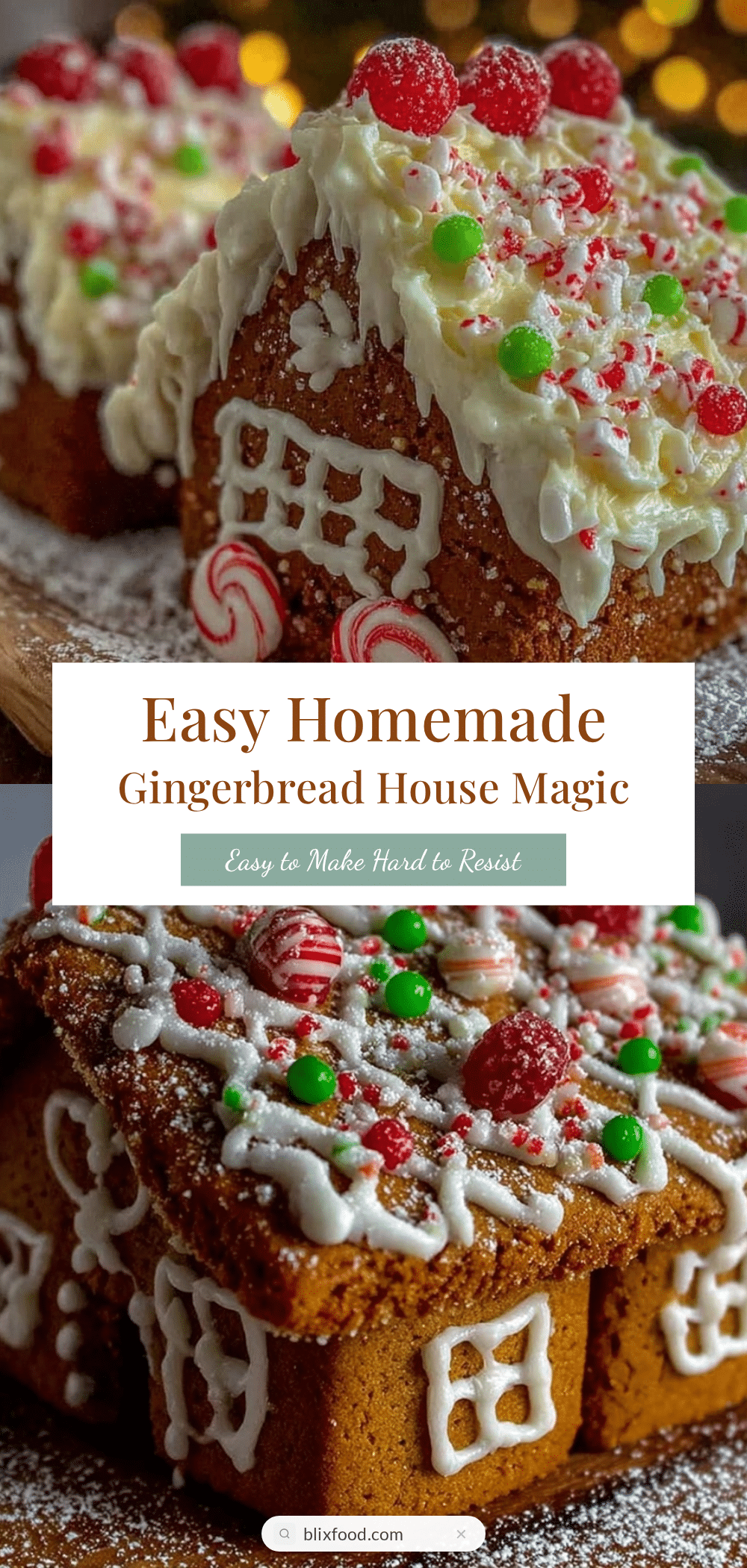
Easy Homemade Gingerbread House from Scratch Perfect for Beginners

This easy homemade gingerbread house recipe is perfect for beginners, featuring simple ingredients and a sturdy, delicious dough that bakes into crisp panels ideal for building festive holiday houses.
- Prep Time: 20 minutes
- Cook Time: 12 minutes
- Total Time: 1 hour 32 minutes
- Yield: 12 servings (panels for one gingerbread house) 1x
- Category: Dessert
- Cuisine: American
Ingredients
- 3 ½ cups (440 g) all-purpose flour
- 1 tsp baking soda
- 2 tbsp ground ginger
- 1 ½ tsp ground cinnamon
- ½ tsp ground cloves
- ½ tsp salt
- ¾ cup (170 g) unsalted butter, softened
- 1 cup (200 g) dark brown sugar
- ½ cup (120 ml) molasses
- 1 large egg, room temperature
- 1 tsp vanilla extract
Instructions
- Mix dry ingredients: In a large bowl, whisk together flour, baking soda, ground ginger, cinnamon, cloves, and salt. Set aside.
- Cream butter and sugar: In a separate bowl, beat softened butter with dark brown sugar until fluffy and lighter in color, about 3 to 5 minutes.
- Add molasses and egg: Beat in molasses, egg, and vanilla extract until fully combined and glossy.
- Combine wet and dry: Gradually add dry ingredients to wet mixture, mixing slowly until dough forms. Chill sticky dough for 30 minutes if needed.
- Chill the dough: Wrap dough in plastic wrap and refrigerate for at least 1 hour or overnight.
- Roll out dough: Preheat oven to 350°F (175°C). Roll dough on a lightly floured surface to 1/4-inch (6 mm) thickness. Cut shapes using templates or freehand.
- Transfer and bake: Place cut pieces on parchment-lined baking sheets. Bake for 10-12 minutes until firm but not over-browned.
- Cool completely: Let panels cool on baking sheets for 5 minutes, then transfer to wire racks to cool fully.
- Prepare royal icing: Whisk together powdered sugar and egg whites or meringue powder with water until thick and glossy.
- Assemble the house: Pipe icing along edges and press pieces together, holding for 20-30 seconds. Support walls with cans or jars and allow at least 1 hour to set before decorating.
Notes
Chill dough well before rolling to prevent sticky and misshapen panels. Use royal icing as glue and support walls with cans or jars while drying. Keep extra icing handy to patch broken panels. Avoid overbaking to prevent brittleness. Store assembled house in a cool, dry place wrapped loosely to keep crisp.
Nutrition
- Serving Size: 1/12th of dough (one
- Calories: 220
- Sugar: 15
- Fat: 7
- Carbohydrates: 35
- Fiber: 1
- Protein: 2
Keywords: gingerbread house, homemade gingerbread, holiday baking, gingerbread recipe, festive dessert, gingerbread house from scratch, easy gingerbread