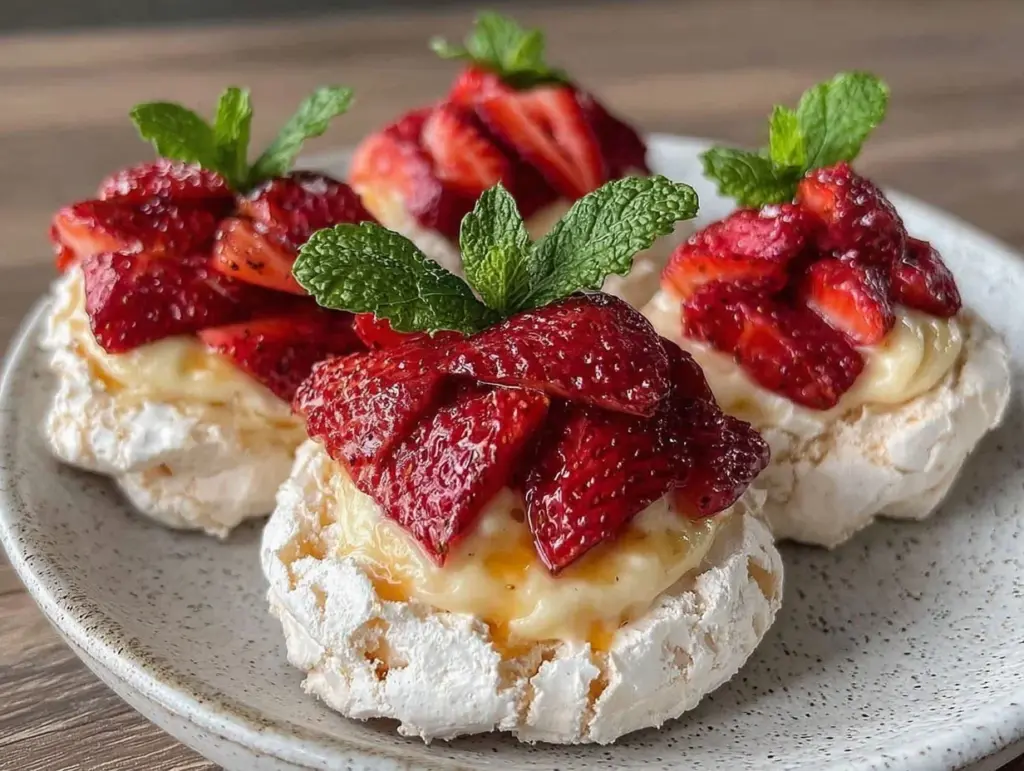
“Are you sure these are supposed to be this light?” my friend asked as I handed over one of my first attempts at mini pavlova nests. Honestly, I wasn’t convinced myself the first time I tried making these delicate treats. The recipe came from a late afternoon when I was craving something sweet but didn’t want to spend hours baking or cleaning up a mountain of dishes. I wanted a dessert that felt fancy but was actually pretty easy — you know how it is after a long day in the kitchen. So, I decided to whip up these mini pavlova nests with lemon curd cream, and the result surprised me. The meringue was feather-light, the nests held their shape perfectly, and that zingy lemon curd cream was the perfect counterbalance to the sweet shell.
That first batch vanished faster than I expected, and since then, I’ve made these mini pavlova nests at least three times in a week whenever friends dropped by unexpectedly or when I just needed a little pick-me-up. They’re just the kind of dessert that feels special without needing a fuss. The delicate crunch cracking under your fork, the pillowy marshmallow center — it’s a tiny bite of joy that lingers.
What stuck with me the most was how this recipe made me rethink pavlova in general. Instead of a giant, showy dessert, these little nests are portable, shareable, and honestly, a bit addictive. Plus, pairing them with lemon curd cream brings a fresh twist that cuts through the sweetness, making each bite balanced and bright. So, if you’ve been curious about pavlova but thought it was too complicated or time-consuming, this recipe might just change your mind — it did mine.
Why You’ll Love This Recipe
I’ve tested this recipe several times, and here’s why I keep going back to these light and fluffy mini pavlova nests with lemon curd cream:
- Quick & Easy: The meringue bakes in about 1 hour, and the lemon curd cream whips up in under 10 minutes. Perfect for last-minute guests or a sweet fix after dinner.
- Simple Ingredients: No surprises here — basic pantry staples like egg whites, sugar, and lemon juice. No need for specialty shopping trips.
- Perfect for Parties: These mini pavlova nests are elegant enough for fancy brunches or holiday gatherings but also fun for casual get-togethers.
- Crowd-Pleaser: Kids and adults alike love the sweet crunch and creamy lemon filling — it’s always a hit whether it’s a potluck or small family dinner.
- Unbelievably Delicious: The contrast between the crisp shell and soft interior of the meringue, combined with the tangy lemon curd, creates a flavor and texture combo that feels like a little celebration in your mouth.
What sets this recipe apart is the technique I use to get the meringue just right — beating the egg whites to stiff peaks with a touch of cornstarch and vinegar for stability, then piping the nests to keep them uniform and delicate. And that lemon curd cream? I make it from scratch, with fresh lemon juice and zest, whipped into fluffy cream for that perfect balance of tart and sweet. Honestly, it’s the kind of dessert that makes you close your eyes after the first bite and smile.
For a twist on classic pavlova that’s both fuss-free and show-stopping, these mini nests deliver every time. They’re a great way to impress without stress, and you might find yourself making them as often as I do — especially when paired with other easy party treats like a festive cranberry cream cheese spread or some fresh shrimp salad appetizers.
What Ingredients You Will Need
This recipe uses simple, wholesome ingredients to create those airy meringue nests and a bright, luscious lemon curd cream that’s a total game-changer. Most are pantry staples, and if you’re missing something, I’ve got easy substitutions to keep things flexible.
- For the Pavlova Nests:
- 4 large egg whites, at room temperature (key for volume)
- 1 cup (200g) superfine sugar (regular granulated sugar works if beaten well)
- 1 teaspoon cornstarch (adds stability and softness inside)
- 1 teaspoon white vinegar or lemon juice (helps firm up the meringue)
- 1/2 teaspoon vanilla extract (optional, for subtle flavor)
- Pinch of salt
- For the Lemon Curd Cream:
- 1/2 cup (120ml) fresh lemon juice (about 2-3 lemons, use organic if possible)
- 1 tablespoon lemon zest (adds bright citrus aroma)
- 3 large egg yolks
- 1/2 cup (100g) granulated sugar
- 4 tablespoons (60g) unsalted butter, cut into cubes, softened
- 1 cup (240ml) heavy cream, chilled (use coconut cream for dairy-free)
- 1-2 tablespoons powdered sugar (optional, for sweetness adjustment)
For the meringue, I highly recommend using fresh eggs at room temp — it makes a big difference in how fluffy the whites get. Superfine sugar dissolves quickly, but if you don’t have it, just blitz regular sugar in a blender for a few seconds. I usually grab organic lemons for the curd because the zest and juice shine through so much.
If you want to keep this gluten-free, you’re good to go as is. And if dairy is a concern, swapping the heavy cream for coconut cream works beautifully in the lemon curd cream, giving it a subtle tropical note.
Equipment Needed
- Electric mixer or stand mixer (for beating egg whites to stiff peaks)
- Mixing bowls (glass or metal preferred for meringue)
- Baking sheet lined with parchment paper or a silicone mat (for shaping nests)
- Piping bag with a round tip or a zip-top bag with the corner snipped (to pipe the nests evenly)
- Small saucepan (for cooking lemon curd)
- Whisk (for smooth lemon curd and cream)
- Spatula (for folding and scraping bowls)
- Fine zester or microplane (for lemon zest)
If you don’t have a stand mixer, an electric hand mixer works just fine but expect to spend a little longer whipping the egg whites. I’ve tried piping the nests with just a spoon, but for nice, consistent shapes, a piping bag is the way to go — it’s worth the tiny extra effort. For cleanup, parchment paper is my favorite over silicone mats because it’s disposable and keeps the meringue from sticking.
Preparation Method
- Preheat the oven and prepare the baking tray: Set your oven to 250°F (120°C). Line a baking sheet with parchment paper. Draw 8 circles, about 3 inches (7.5 cm) in diameter, spaced evenly apart on the paper as a guide for your nests.
- Beat the egg whites: In a clean, dry bowl, start beating 4 large egg whites and a pinch of salt on medium speed until soft peaks form (about 2-3 minutes). You’ll notice the foam turn glossy and white.
- Gradually add sugar: Increase the mixer speed to high. Slowly add 1 cup (200g) superfine sugar a tablespoon at a time, beating well after each addition. This gradual method helps the sugar dissolve fully and prevents graininess.
- Check for stiff peaks: After all the sugar is incorporated, the meringue should be glossy and hold stiff peaks when you lift the whisk (about 7-10 minutes total beating). Rub a little meringue between your fingers to check for sugar grit — it should feel smooth.
- Fold in cornstarch, vinegar, and vanilla: Gently fold in 1 teaspoon cornstarch, 1 teaspoon white vinegar or lemon juice, and 1/2 teaspoon vanilla extract using a spatula. This will stabilize the meringue and keep the inside soft.
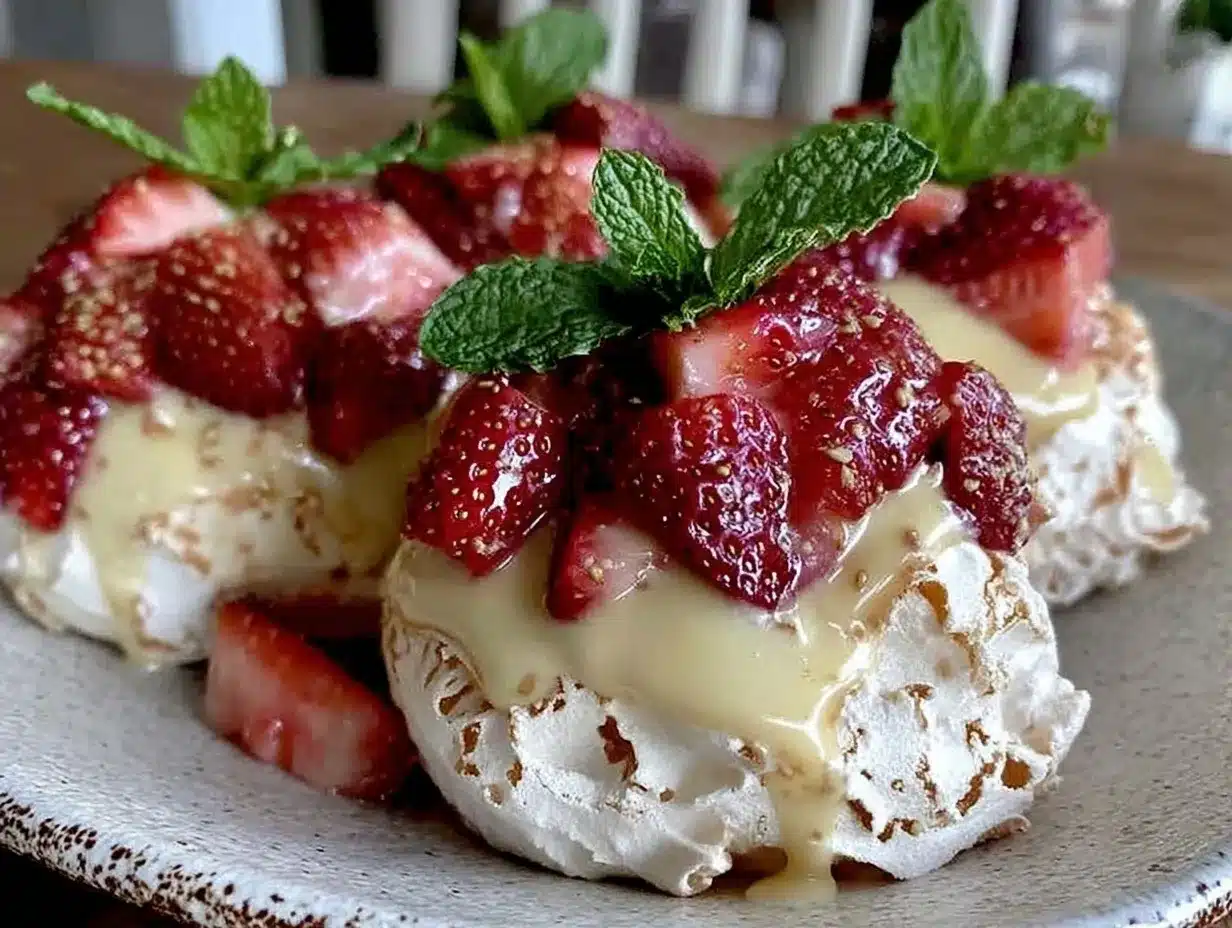
- Pipe the nests: Transfer the meringue to a piping bag fitted with a round tip. Pipe circles following your drawn guides, then build a small wall around the edge to form a nest shape with a hollow center. Don’t worry if they’re not perfect; rustic is charming!
- Bake the nests: Place the tray in the oven and bake for 1 hour. The meringues should be dry to the touch and easily peel off the parchment. Turn off the oven and leave the nests inside to cool completely, ideally overnight. This slow cooling prevents cracking.
- Make the lemon curd: In a small saucepan, whisk together 1/2 cup (120ml) fresh lemon juice, 1 tablespoon lemon zest, 3 egg yolks, and 1/2 cup (100g) sugar. Cook over low heat, stirring constantly, until the mixture thickens and coats the back of a spoon (about 8-10 minutes). Remove from heat and whisk in 4 tablespoons (60g) softened butter until smooth. Let cool.
- Whip the cream: In a chilled bowl, beat 1 cup (240ml) heavy cream until soft peaks form. Gently fold in the cooled lemon curd. Taste and add 1-2 tablespoons powdered sugar if you want it sweeter.
- Assemble the pavlova nests: Just before serving, spoon or pipe the lemon curd cream into the hollow center of each meringue nest. Garnish with fresh berries or mint if you like.
Pro tip: If your meringue cracks during baking, don’t stress. It still tastes amazing, and the cracks add character! Just pipe the cream over the cracks to hide them. Also, avoid opening the oven door during baking to keep a stable temperature, which helps prevent collapsing.
Cooking Tips & Techniques
Getting that perfect light and fluffy texture can be tricky, but a few tips from my trial-and-error days can save you some headaches:
- Use room temperature egg whites: They whip up faster and reach a higher volume than cold whites straight from the fridge. I usually take them out 30 minutes before starting.
- Clean bowls and beaters: Any grease or moisture can prevent the whites from whipping properly. I always wipe my bowl and beaters with a little vinegar and paper towel before starting.
- Add sugar slowly: Pouring it in too fast can deflate your meringue or leave sugar grains. Patience is key here.
- Don’t rush cooling: Letting the nests cool gradually in the turned-off oven overnight helps them dry out without cracking. If you’re impatient like me, just leave them in for at least an hour after baking.
- Stabilize the meringue: Cornstarch and vinegar give that soft marshmallow center without collapsing. I’ve tried skipping these, and the nests ended up chewy rather than fluffy.
- Whip cream last minute: Lemon curd cream can separate if left too long. Whip and fold just before serving for the best texture.
Once, I accidentally used regular sugar instead of superfine, and the meringue was grainy — lesson learned to always use the right sugar or blitz it fine. Also, multitasking helps; while the meringue bakes, I prep the lemon curd to save time. Just keep an eye on the curd so it doesn’t scramble.
Variations & Adaptations
These mini pavlova nests are pretty versatile — here are some ways I’ve played around with the recipe:
- Flavor swaps for the curd: Try replacing lemon juice with lime or orange for a different citrus punch. Blood orange curd is especially stunning and pairs beautifully with fresh raspberries.
- Dairy-free option: Use coconut cream instead of heavy cream and vegan butter in the lemon curd to make this recipe suitable for dairy-free diets.
- Fruit toppings: In summer, pile on fresh berries like strawberries, blueberries, and blackberries. In cooler months, poached pears or stewed plums add warmth and richness.
- Nutty crunch: Sprinkle finely chopped toasted pistachios or almonds on top for texture contrast.
- Mini pavlova nests with a twist: For a chocolate version, fold a tablespoon of cocoa powder into your meringue before piping or add shaved dark chocolate over the lemon curd cream.
One of my favorite tweaks was making a batch with a zesty garlic marinated mushroom appetizer alongside for a savory-sweet contrast at a dinner party. The guests loved the combo, and it made for a well-rounded spread.
Serving & Storage Suggestions
Serve these mini pavlova nests chilled or at room temperature. I find they taste best within a few hours of assembly because the lemon curd cream keeps that fresh tang and the meringue stays crisp on the outside with a soft center.
For presentation, arrange the nests on a pretty platter, garnish with fresh mint leaves or edible flowers for a festive touch. They pair wonderfully with a light sparkling wine or a floral tea like chamomile or jasmine.
If you need to store leftovers, keep the meringue nests and lemon curd cream separate. Store the baked nests in an airtight container at room temperature for up to 3 days (don’t refrigerate or they’ll soften), and keep the lemon curd cream chilled in the fridge for up to 2 days. Assemble just before serving.
To reheat slightly hardened lemon curd, warm it gently in a double boiler or microwave in short bursts, then whip again before folding into cream. As for the meringue, avoid reheating—it’s best fresh and dry.
Nutritional Information & Benefits
Each mini pavlova nest with lemon curd cream is a light treat, roughly 180-220 calories depending on portion size and toppings. It’s naturally gluten-free, which is great if you’re watching for allergens. The egg whites supply protein without fat, and the lemon juice adds vitamin C for a refreshing boost.
The sugar content is moderate, but because the nests are airy and small, you get a sweet satisfaction without feeling weighed down. If you’re after a slightly healthier twist, you can reduce sugar in the lemon curd or swap heavy cream for a lower-fat option, though it will change the texture.
From a wellness perspective, I love that this recipe feels indulgent but isn’t overly rich or dense like many desserts. It’s a reminder that sometimes, simple ingredients can come together to create something special and satisfying without guilt.
Conclusion
Light and fluffy mini pavlova nests with lemon curd cream are a dessert that feels like a little celebration every time you make them. They’re approachable, fun to assemble, and deliver that perfect balance of crisp, soft, sweet, and tangy. Whether you’re hosting a brunch, need a last-minute dessert, or just want a sweet treat that doesn’t weigh you down, these nests are a winner.
I love that this recipe invites customization — add your favorite fruit, swap citrus flavors, or try vegan versions. It’s flexible enough for everyday enjoyment but special enough to bring out when company comes. Honestly, it’s become my go-to when I want a dessert that looks impressive but doesn’t require hours in the kitchen.
If you try this recipe, I’d love to hear how you make it your own. Leave a comment or share your variations — there’s always a new twist to discover. Remember, good food is about joy, connection, and a little bit of sweetness in life.
FAQs
Can I make the pavlova nests ahead of time?
Yes! You can bake the meringue nests up to 3 days in advance and store them in an airtight container at room temperature. Just keep the lemon curd cream separate and assemble right before serving.
What if my egg whites don’t whip up properly?
Make sure your bowl and beaters are completely clean and dry. Use room temperature egg whites and avoid any yolk contamination. Adding a pinch of salt or cream of tartar can also help stabilize the whites.
Can I use store-bought lemon curd?
Absolutely! Store-bought lemon curd works fine, but homemade lemon curd cream has a fresher, brighter flavor and creamier texture that really lifts the dessert.
How do I prevent the pavlova nests from cracking?
Bake at a low temperature (250°F/120°C) and let the nests cool inside the turned-off oven slowly. Avoid opening the oven door during baking to keep the temperature steady.
What can I use instead of heavy cream in the lemon curd cream?
You can substitute coconut cream for a dairy-free option, or use whipped Greek yogurt for a tangier, lighter filling. Just note the texture and flavor will vary slightly.
Pin This Recipe!
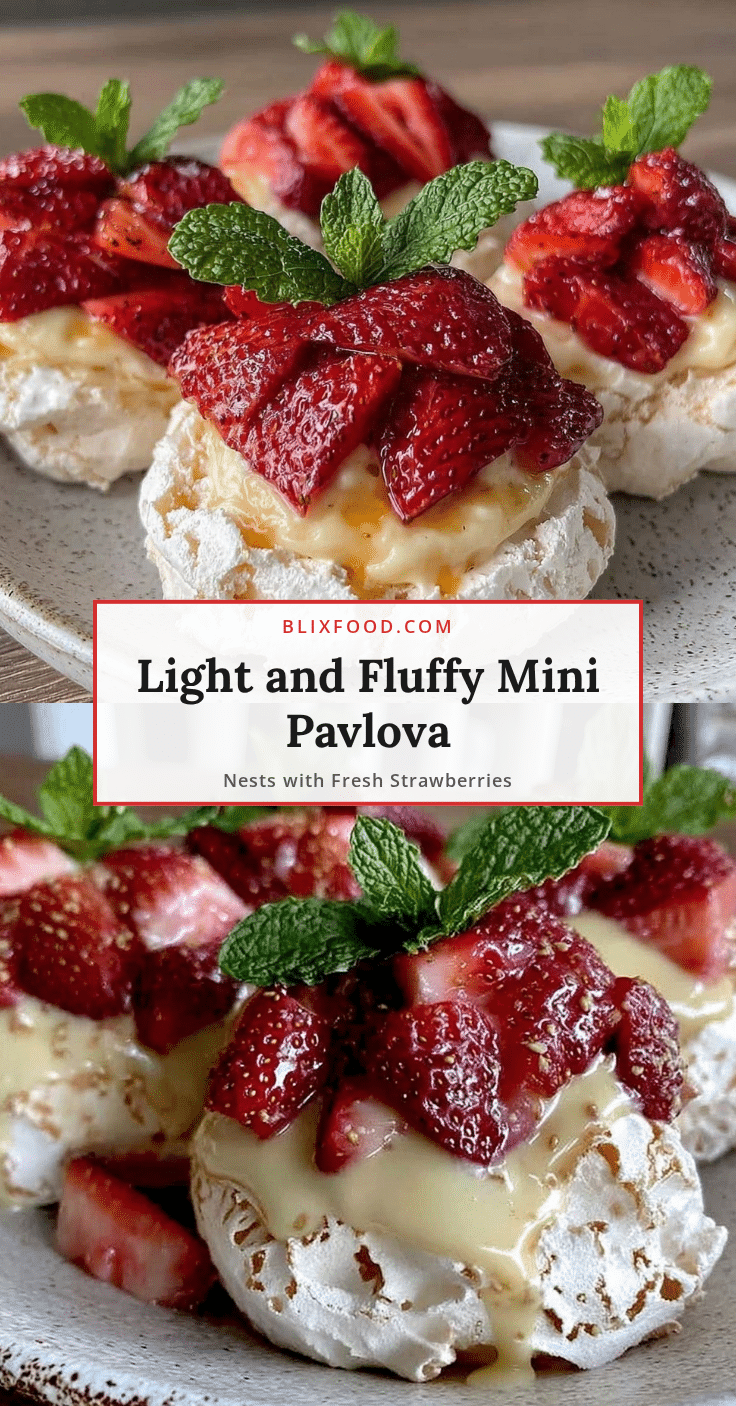
Light and Fluffy Mini Pavlova Nests Recipe with Easy Lemon Curd Cream
Delicate mini pavlova nests with a crisp shell and soft marshmallow center, paired with a bright and luscious homemade lemon curd cream. Perfect for an elegant yet easy dessert.
- Prep Time: 15 minutes
- Cook Time: 1 hour
- Total Time: 1 hour 15 minutes plus cooling time (overnight recommended)
- Yield: 8 mini pavlova nests 1x
- Category: Dessert
- Cuisine: Australian/New Zealand
Ingredients
- 4 large egg whites, at room temperature
- 1 cup (200g) superfine sugar
- 1 teaspoon cornstarch
- 1 teaspoon white vinegar or lemon juice
- 1/2 teaspoon vanilla extract (optional)
- Pinch of salt
- 1/2 cup (120ml) fresh lemon juice (about 2–3 lemons)
- 1 tablespoon lemon zest
- 3 large egg yolks
- 1/2 cup (100g) granulated sugar
- 4 tablespoons (60g) unsalted butter, softened
- 1 cup (240ml) heavy cream, chilled (or coconut cream for dairy-free)
- 1–2 tablespoons powdered sugar (optional)
Instructions
- Preheat oven to 250°F (120°C). Line a baking sheet with parchment paper and draw 8 circles about 3 inches (7.5 cm) in diameter as guides.
- Beat 4 large egg whites with a pinch of salt on medium speed until soft peaks form (2-3 minutes).
- Increase mixer speed to high and gradually add 1 cup superfine sugar a tablespoon at a time, beating well after each addition until stiff peaks form (7-10 minutes total).
- Gently fold in 1 teaspoon cornstarch, 1 teaspoon white vinegar or lemon juice, and 1/2 teaspoon vanilla extract using a spatula.
- Transfer meringue to a piping bag fitted with a round tip and pipe circles following the guides, building a small wall around the edge to form nests with hollow centers.
- Bake for 1 hour until dry to the touch. Turn off oven and let nests cool completely inside oven, ideally overnight.
- To make lemon curd: whisk 1/2 cup fresh lemon juice, 1 tablespoon lemon zest, 3 egg yolks, and 1/2 cup sugar in a small saucepan. Cook over low heat, stirring constantly until thickened (8-10 minutes). Remove from heat and whisk in 4 tablespoons softened butter. Let cool.
- Whip 1 cup heavy cream until soft peaks form. Gently fold in cooled lemon curd. Add 1-2 tablespoons powdered sugar if desired.
- Just before serving, spoon or pipe lemon curd cream into the hollow center of each meringue nest. Garnish with fresh berries or mint if desired.
Notes
Use room temperature egg whites for best volume. Beat sugar in slowly to avoid graininess. Cool nests slowly in turned-off oven to prevent cracking. Lemon curd cream should be whipped and folded just before serving to maintain texture. Store meringue nests and lemon curd cream separately. Meringue nests keep up to 3 days at room temperature; lemon curd cream keeps up to 2 days refrigerated.
Nutrition
- Serving Size: 1 mini pavlova nest
- Calories: 200
- Sugar: 20
- Sodium: 50
- Fat: 12
- Saturated Fat: 7
- Carbohydrates: 22
- Protein: 3
Keywords: mini pavlova, lemon curd cream, meringue nests, easy dessert, party dessert, gluten-free dessert, light dessert