Let me tell you, the scent of fresh basil mingling with garlic and toasted pine nuts is enough to make anyone’s mouth water. Honestly, the first time I whipped up this basil pesto recipe, I was instantly hooked—the kind of moment where you pause, take a deep breath, and just smile because you know you’re onto something truly special. It was years ago, when I was knee-high to a grasshopper, helping my grandma in her sunny kitchen, that I first tasted a pesto so fresh and vibrant it felt like a burst of summer on a plate.
Back then, pesto felt like a secret treasure passed down through generations, and I always wished I’d discovered how to make it myself sooner. My family couldn’t stop sneaking spoonfuls straight from the jar (and I can’t really blame them). This fresh and flavorful basil pesto recipe has since become a staple for family gatherings, quick weeknight dinners, and even as a sweet gift for friends who appreciate pure, nostalgic comfort in a jar.
Let’s face it, this isn’t just any pesto sauce—it’s dangerously easy to make, bursting with bright, herbal notes that brighten up any dish. Whether you want to toss it with pasta, spread it on crusty bread, or dollop it over grilled veggies, this homemade fresh pesto sauce will brighten your Pinterest recipe board and your taste buds. And yes, you can have it ready in 10 minutes flat, which makes it perfect for those days when you’re craving something fresh but don’t want to spend hours in the kitchen.
Why You’ll Love This Recipe
After testing this basil pesto recipe multiple times (in the name of research, of course), I can say it’s truly one of the best ways to bring fresh flavor into your kitchen without fuss. Here’s why I think you’ll love it just as much as I do:
- Quick & Easy: Comes together in under 10 minutes, perfect for busy weeknights or last-minute cravings.
- Simple Ingredients: No fancy grocery trips needed; you likely already have everything in your kitchen.
- Perfect for Any Occasion: Great for casual dinners, potlucks, or even as a bright appetizer spread.
- Crowd-Pleaser: Always gets rave reviews from kids and adults alike—trust me, pesto haters are rare!
- Unbelievably Delicious: The texture and flavor combo is next-level comfort food with a fresh herbal kick.
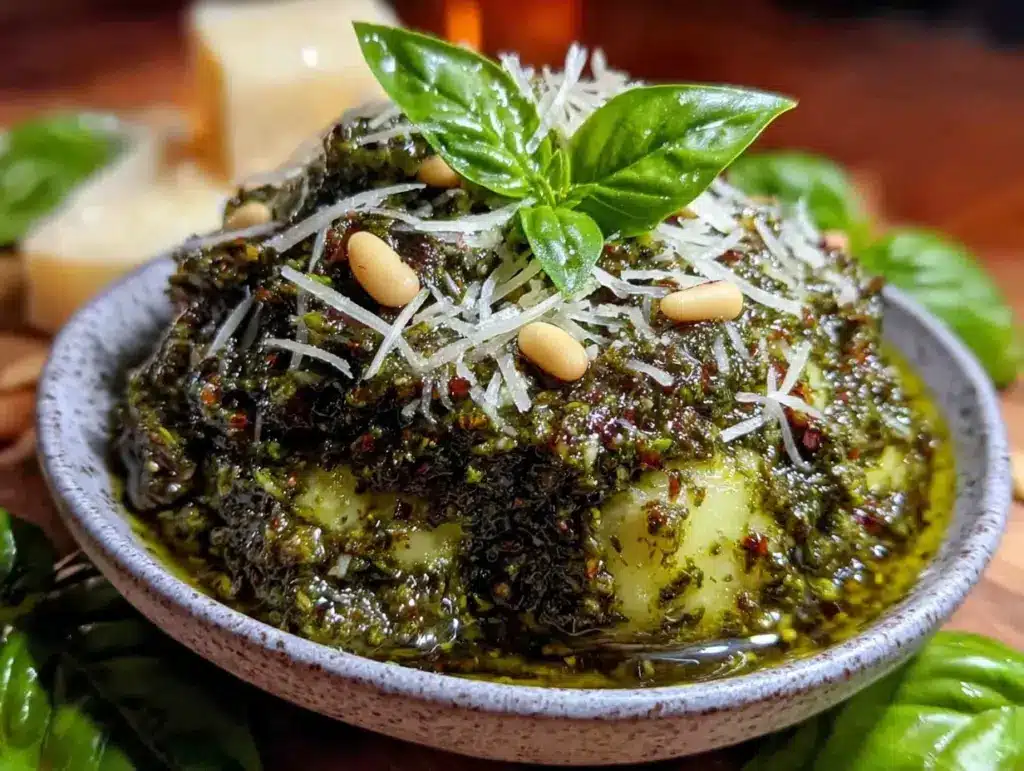
What sets this basil pesto recipe apart? It’s all about balance—the toasted pine nuts add a subtle nuttiness without overwhelming, and the fresh lemon juice wakes up the basil’s natural brightness. Plus, blending the ingredients just right gives you a luscious, slightly chunky sauce that feels homemade in the best way. It’s the kind of recipe that makes you close your eyes after the first bite, savoring that fresh, garlicky goodness. Honestly, it feels like a warm hug from a summer garden, and you’re going to want to bookmark this one for every season.
What Ingredients You Will Need
This basil pesto recipe uses simple, wholesome ingredients to deliver bold flavor and satisfying texture without the fuss. Most of these are pantry staples, and a few fresh items make all the difference.
- Fresh basil leaves (about 2 packed cups) – the heart of the pesto, use bright green and tender leaves for the best flavor
- Garlic cloves (2 large, peeled) – adds that classic punch; adjust based on how garlicky you like it
- Pine nuts (1/4 cup, toasted) – I recommend lightly toasting them in a dry skillet to bring out their nutty aroma
- Parmesan cheese (1/2 cup, freshly grated) – I prefer Parmigiano-Reggiano for its rich, nutty taste
- Extra virgin olive oil (1/2 cup) – go for a fruity, high-quality olive oil; it really shines here
- Fresh lemon juice (1 tablespoon) – brightens and balances the flavors beautifully
- Salt (to taste, about 1/2 teaspoon) – kosher or sea salt works best
- Freshly ground black pepper (a few grinds) – adds just a touch of warmth
Optional: A pinch of red pepper flakes if you like a little heat, or swap pine nuts for walnuts or almonds if those are easier to find. Use dairy-free cheese or nutritional yeast for a vegan twist. In the summer, swapping in some fresh spinach or arugula can add a peppery edge.
Equipment Needed
- Food processor or blender: Essential for blending the pesto to just the right consistency. I find a food processor gives better texture control.
- Measuring cups and spoons: For precise ingredient amounts—especially with oil and lemon juice.
- Spatula: To scrape down the sides of your processor bowl and get every bit of pesto out.
- Small skillet: For toasting pine nuts gently without burning them.
If you don’t have a food processor, a sturdy mortar and pestle works, though it takes a bit more elbow grease. I started with a mortar when I was a newbie, and honestly, it’s a fun way to get hands-on with the sauce. For budget-friendly options, mini choppers can do the trick, just pulse carefully to avoid over-processing.
Preparation Method
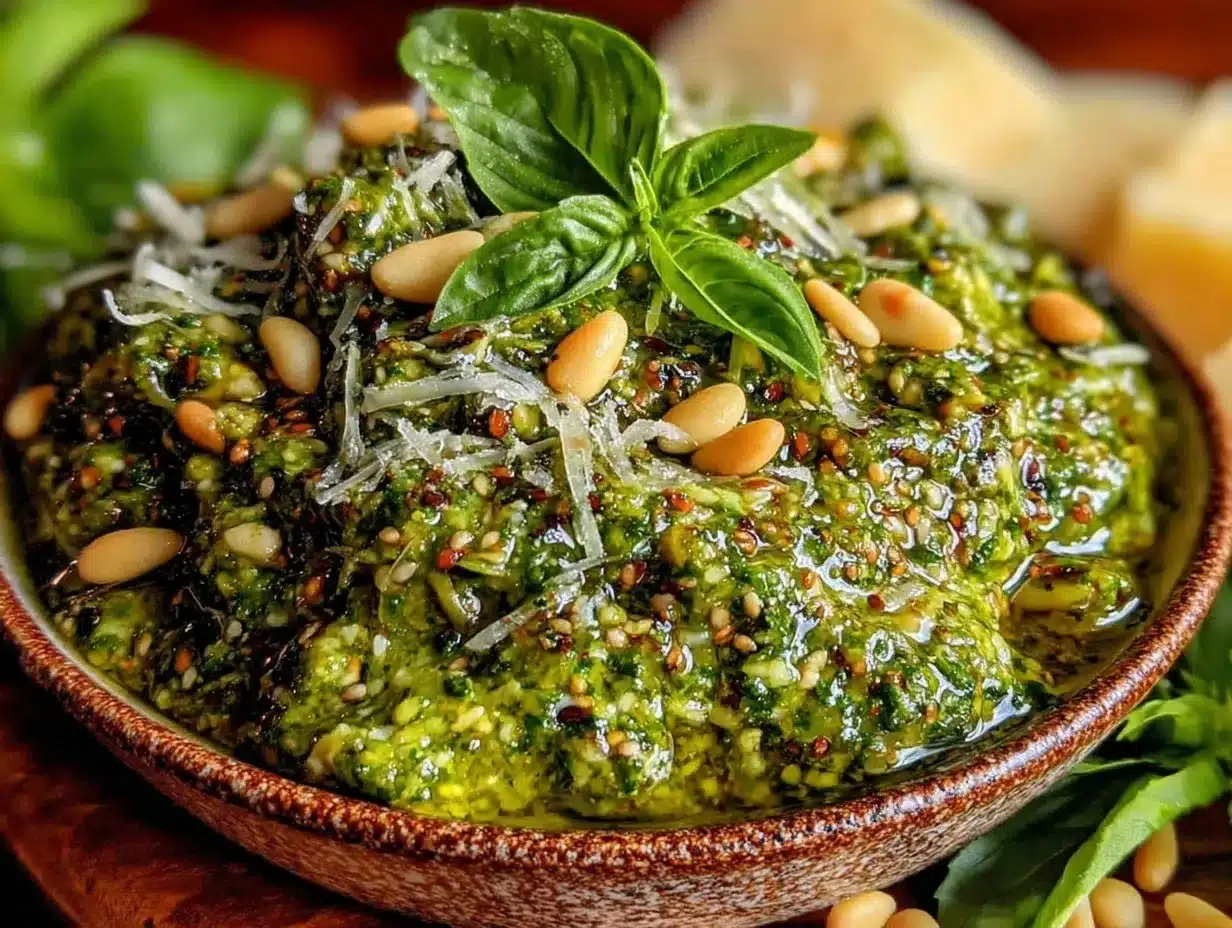
- Toast the pine nuts: Heat a dry skillet over medium heat. Add 1/4 cup pine nuts and toast, stirring frequently, for 3-4 minutes or until golden and fragrant. Watch closely—they burn fast! Remove from heat and let cool.
- Prepare basil and garlic: Rinse the basil leaves gently and pat dry with a kitchen towel to avoid excess water (which can dilute the pesto). Peel two large garlic cloves.
- Combine ingredients in processor: In your food processor, add basil leaves, toasted pine nuts, garlic cloves, and 1/2 cup grated Parmesan cheese. Pulse a few times just to start breaking things down.
- Add olive oil and lemon juice: With the processor running on low, slowly drizzle in 1/2 cup extra virgin olive oil and 1 tablespoon fresh lemon juice. This slow addition helps create a creamy texture. Stop and scrape down the sides with a spatula as needed.
- Season: Add 1/2 teaspoon salt and a few grinds of black pepper. Pulse a few more times until combined but still a little chunky. Taste and adjust seasoning—sometimes I add a tad more lemon juice or salt depending on the basil’s brightness.
- Transfer and store: Spoon the pesto into a clean jar or bowl. If not using immediately, cover the surface with a thin layer of olive oil to keep the vibrant green color and refrigerate. It’s best used within 3-4 days.
Note: If your pesto feels too thick, add a teaspoon or two of water or more olive oil to loosen it up. The fresh smell and bright green color are your cues—if it looks dull or smells off, it’s time for a fresh batch.
Cooking Tips & Techniques
One of the trickiest parts of making basil pesto is achieving the perfect texture—too much processing and it turns into a puree, too little and it’s chunky in an uneven way. Here’s what I’ve learned over many batches:
- Toast nuts gently: Toasting brings out their oils and adds a subtle sweetness, but burnt nuts ruin the pesto. Keep your eyes peeled.
- Don’t over-process: Pulse in short bursts. You want a slightly coarse texture, not a smooth paste.
- Use fresh basil: Basil loses its punch if it’s wilted or bruised. Pick leaves that are bright green and fragrant.
- Slowly add olive oil: Drizzling the oil while blending helps emulsify the sauce for a creamy finish.
- Balance flavors: Lemon juice brightens but too much can overpower. Add gradually and taste often.
Timing is key if you’re multitasking—toast the pine nuts first while prepping other ingredients to save time. If you make this pesto ahead, bring it to room temperature before serving so the flavors fully open up. Trust me, pesto fresh out of the fridge tastes a bit dull.
Variations & Adaptations
This basil pesto recipe is wonderfully flexible. Here are a few ways I’ve customized it depending on the season or dietary needs:
- Vegan version: Swap Parmesan for nutritional yeast or a vegan cheese alternative. It still delivers that cheesy umami without dairy.
- Nut-free pesto: Replace pine nuts with sunflower seeds or pumpkin seeds, toasted for that nutty crunch without allergy worries.
- Spicy twist: Add a pinch of red pepper flakes or a small fresh chili to the mix for a subtle heat boost.
- Green mix: Blend half basil with half fresh spinach or arugula for a milder, earthier flavor and a vibrant green color.
- Cooking method: While traditionally uncooked, I’ve lightly warmed pesto with pasta just before serving for a silky coating without losing freshness.
One favorite variation I tried recently was adding a splash of toasted sesame oil for an unexpected nutty depth—totally different but delicious!
Serving & Storage Suggestions
This basil pesto shines when served fresh at room temperature. Toss it with hot pasta, spread it on toasted baguette slices, or swirl it into soups for a fresh herbal kick. It pairs beautifully with grilled chicken, roasted vegetables, or even as a dip for crunchy crudité.
To store, keep pesto in an airtight container in the refrigerator, topped with a thin layer of olive oil to prevent browning. It will keep well for up to 4 days. For longer storage, freeze pesto in ice cube trays; once frozen, transfer cubes to a zip-top bag and thaw as needed. Just give it a quick stir after thawing to bring back that creamy texture.
Reheating pesto isn’t usually necessary, but if you do, warm gently over low heat or mix into hot dishes at the last minute to preserve its fresh flavor. Over time, the flavors meld and deepen—sometimes I swear the next day tastes even better.
Nutritional Information & Benefits
Per serving (about 2 tablespoons), this basil pesto recipe offers approximately:
| Calories | 150 |
|---|---|
| Fat | 15g (mostly healthy fats from olive oil and nuts) |
| Protein | 3g |
| Carbohydrates | 1.5g |
Basil is packed with antioxidants and vitamins A, K, and C, which support immunity and skin health. Olive oil provides heart-healthy monounsaturated fats, while pine nuts contribute essential minerals like magnesium and iron. This pesto is naturally gluten-free and can be adapted to be dairy-free or vegan. I love this recipe as a feel-good sauce that brings fresh herbs and healthy fats to the table in a simple, delicious way.
Conclusion
Honestly, this basil pesto recipe is a keeper for anyone who loves fresh, vibrant flavors without the fuss. It’s quick, easy, and packed with personality—perfect for dressing up everyday meals or impressing guests with minimal effort. I encourage you to try it as-is, then tweak it to match your taste buds and pantry. That’s the beauty of homemade pesto: it’s your sauce, your rules.
I keep coming back to this recipe because it’s like a little jar of sunshine and comfort all rolled into one. If you give it a try, please drop a comment below with your favorite twists or how it turned out—you know, sharing is caring! Now, go on and make some magic in your kitchen. You won’t regret it.
FAQs
Can I use frozen basil for this pesto recipe?
Frozen basil can work in a pinch, but fresh basil leaves offer the best flavor and vibrant color. If using frozen, thaw and drain well to avoid watery pesto.
How long does homemade basil pesto last in the fridge?
Stored properly in an airtight container with olive oil on top, pesto lasts about 3-4 days refrigerated.
What can I use instead of pine nuts?
Walnuts, almonds, sunflower seeds, or pumpkin seeds all make great substitutes, especially if you toast them lightly first.
Is it necessary to add cheese to pesto?
Cheese adds richness and umami, but you can skip it or replace with nutritional yeast for a vegan option.
Can I freeze basil pesto?
Yes! Freeze pesto in ice cube trays for convenient single servings, then transfer to a sealed bag. Thaw as needed and stir well before using.
Pin This Recipe!
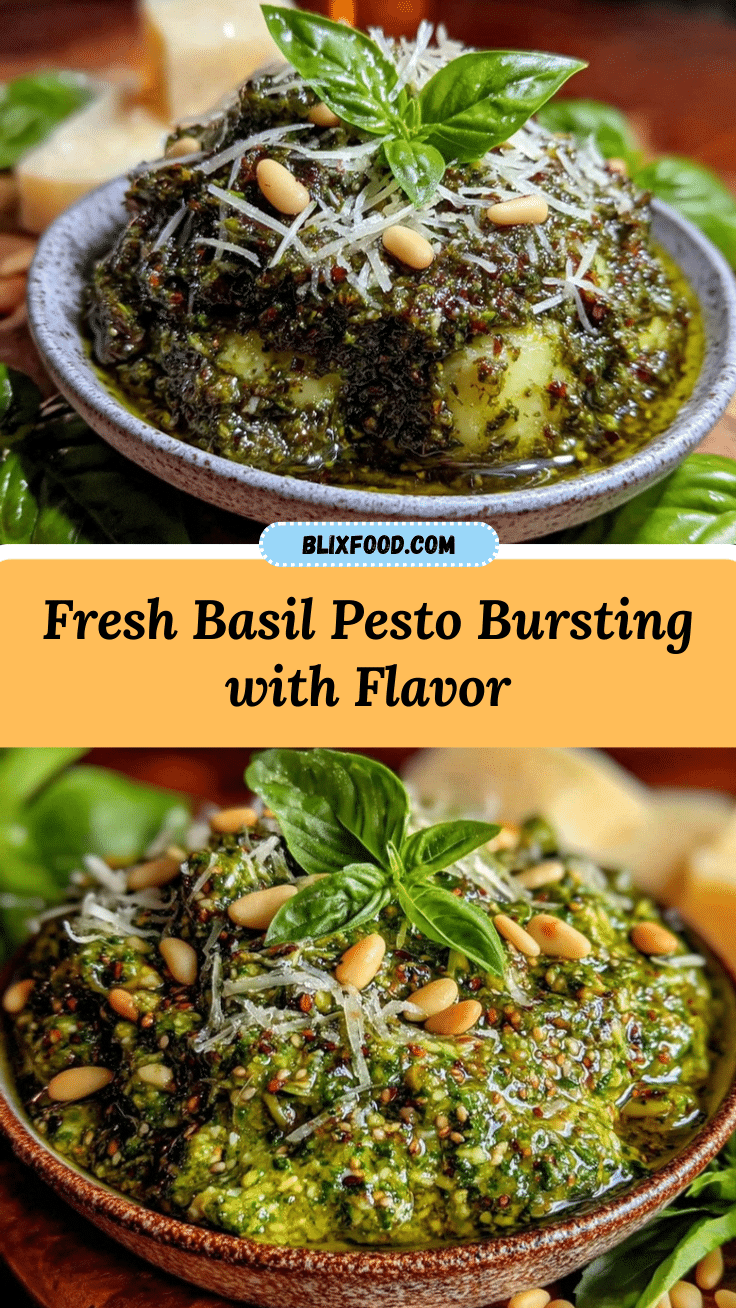
Basil Pesto Recipe Easy Homemade Fresh Pesto Sauce in 10 Minutes
A quick and easy homemade basil pesto sauce bursting with fresh basil, garlic, toasted pine nuts, and Parmesan cheese. Ready in 10 minutes, perfect for pasta, bread, or grilled veggies.
- Prep Time: 5 minutes
- Cook Time: 5 minutes
- Total Time: 10 minutes
- Yield: About 1 cup (approximately 8 servings) 1x
- Category: Sauce
- Cuisine: Italian
Ingredients
- 2 packed cups fresh basil leaves
- 2 large garlic cloves, peeled
- 1/4 cup pine nuts, toasted
- 1/2 cup freshly grated Parmesan cheese
- 1/2 cup extra virgin olive oil
- 1 tablespoon fresh lemon juice
- 1/2 teaspoon salt (kosher or sea salt)
- Freshly ground black pepper, a few grinds
- Optional: pinch of red pepper flakes
- Optional: substitute pine nuts with walnuts or almonds
- Optional: dairy-free cheese or nutritional yeast for vegan version
- Optional: fresh spinach or arugula (for green mix variation)
Instructions
- Toast the pine nuts: Heat a dry skillet over medium heat. Add 1/4 cup pine nuts and toast, stirring frequently, for 3-4 minutes or until golden and fragrant. Remove from heat and let cool.
- Prepare basil and garlic: Rinse the basil leaves gently and pat dry with a kitchen towel. Peel two large garlic cloves.
- Combine ingredients in processor: In your food processor, add basil leaves, toasted pine nuts, garlic cloves, and 1/2 cup grated Parmesan cheese. Pulse a few times to start breaking down.
- Add olive oil and lemon juice: With the processor running on low, slowly drizzle in 1/2 cup extra virgin olive oil and 1 tablespoon fresh lemon juice. Stop and scrape down the sides with a spatula as needed.
- Season: Add 1/2 teaspoon salt and a few grinds of black pepper. Pulse a few more times until combined but still slightly chunky. Taste and adjust seasoning as needed.
- Transfer and store: Spoon the pesto into a clean jar or bowl. Cover the surface with a thin layer of olive oil if not using immediately and refrigerate. Best used within 3-4 days.
Notes
Toast pine nuts gently to avoid burning. Pulse ingredients in short bursts to maintain a slightly chunky texture. Use fresh basil leaves for best flavor and color. Slowly drizzle olive oil while blending for creamy texture. Store pesto with a thin layer of olive oil on top to preserve color. If pesto is too thick, add a teaspoon or two of water or more olive oil to loosen.
Nutrition
- Serving Size: 2 tablespoons
- Calories: 150
- Fat: 15
- Carbohydrates: 1.5
- Protein: 3
Keywords: basil pesto, homemade pesto, fresh pesto sauce, easy pesto recipe, quick pesto, Italian sauce, pesto with pine nuts, vegan pesto option