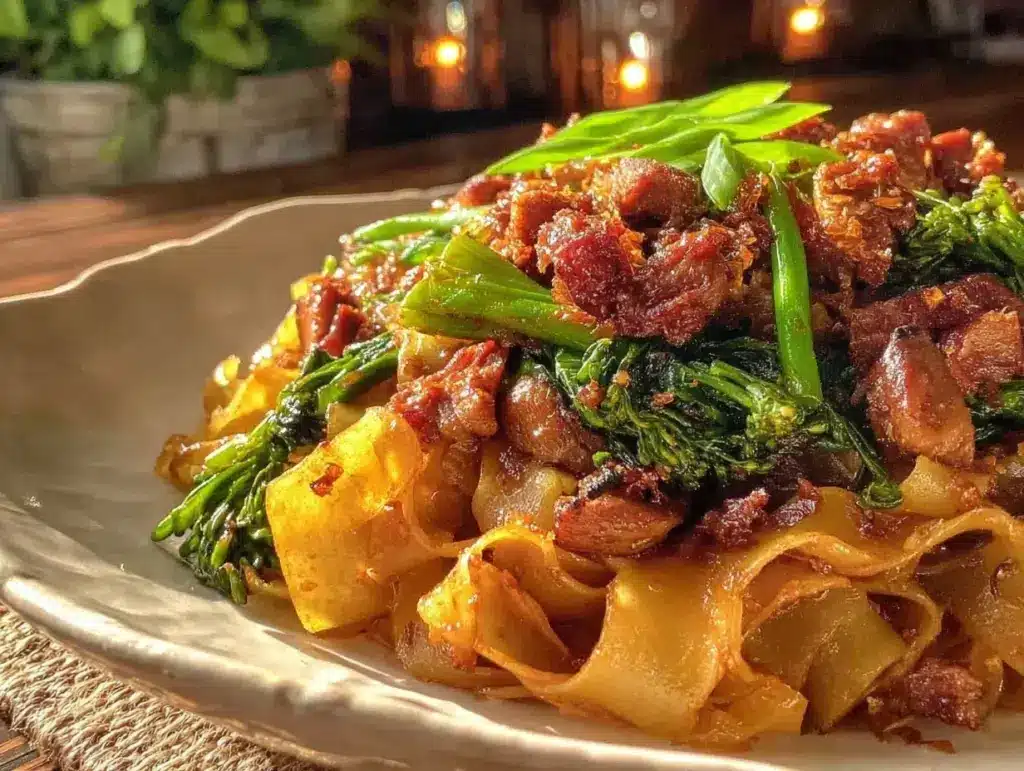
Let me tell you, the moment those wide, glossy rice noodles sizzle in the pan with that rich, caramelized soy sauce aroma, it’s enough to make anyone’s mouth water. The first time I made this Flavorful Pad See Ew Noodles with Caramelized Soy Sauce, I was instantly hooked. It was one of those rare kitchen moments where everything just clicks—the kind of moment where you pause, take a deep breath, and just smile because you know you’re onto something truly special.
Years ago, when I was knee-high to a grasshopper, my grandma used to cook simple, comforting dishes that always had this magical knack for bringing the family together. Pad See Ew was never on her menu, but stumbling upon this recipe during a rainy weekend food marathon instantly reminded me of that warmth. I wish I’d discovered it years earlier because it feels like a warm hug wrapped in noodles.
Honestly, my family couldn’t stop sneaking these noodles off the pan while I was plating them (and I can’t really blame them). There’s something dangerously easy about this dish—pure, nostalgic comfort with a bit of a sweet-savory kick that brightens up any weeknight. Whether you’re looking for a quick dinner or a show-stopping dish for your next potluck, this Flavorful Pad See Ew Noodles recipe with easy caramelized soy sauce will have you coming back for seconds, no doubt about it.
In the name of research, of course, I’ve tested this recipe multiple times, and it’s become a staple for family gatherings and gifting dinner guests alike. Trust me, you’re going to want to bookmark this one.
Why You’ll Love This Recipe
After countless tries and tweaks, I can say this Pad See Ew recipe stands out for so many reasons. It’s more than just noodles with sauce—it’s an experience. Here’s why you’re going to love it:
- Quick & Easy: Comes together in under 30 minutes, perfect for those busy weeknights or sudden cravings.
- Simple Ingredients: No exotic ingredients here—chances are you already have everything in your kitchen.
- Perfect for Any Occasion: Ideal for cozy dinners, casual get-togethers, or even impressing guests without breaking a sweat.
- Crowd-Pleaser: Kids and adults alike rave about the balance of smoky, sweet, and savory flavors.
- Unbelievably Delicious: The caramelized soy sauce creates a glossy, slightly sweet coating that hugs every noodle.
What really makes this recipe different? It’s all about that caramelized soy sauce—slow-cooked to bring out the deep, complex flavors that you don’t get from just tossing soy sauce together. Plus, I blend in fresh garlic and Chinese broccoli for a pop of freshness and texture. It’s comfort food that feels authentic and homemade but without any fuss.
This recipe isn’t just good—it’s the kind that makes you close your eyes after the first bite. Perfect if you want a low-stress dish that tastes like you spent hours crafting it but really takes minutes.
What Ingredients You Will Need
This recipe uses simple, wholesome ingredients to deliver bold flavor and satisfying texture without the fuss. Most are pantry staples or easy to find at your local grocery or Asian market.
- Wide rice noodles (sen yai): Fresh or dried, softened according to package instructions (I prefer fresh for best texture).
- Soy sauce: Use low-sodium for the base flavor and dark soy sauce to get that deep caramel color and sweetness.
- Oyster sauce: Adds a savory depth (substitute with vegetarian mushroom sauce if needed).
- Garlic cloves: Minced fresh garlic is a must for that punch of aroma.
- Chinese broccoli (gai lan): Washed and chopped, adds a nice crunch and slight bitterness that balances the dish.
- Eggs: Lightly beaten, to add body and richness.
- Vegetable oil or peanut oil: For stir-frying (peanut oil gives a nice nutty flavor).
- White pepper: A subtle heat that’s classic in Thai cooking.
- Optional protein: Thinly sliced chicken, tofu, or shrimp add heartiness if you want.
Pro tip: I recommend brands like Kikkoman for soy sauce and Lee Kum Kee for oyster sauce for consistent flavor. If you can’t find Chinese broccoli, baby bok choy works well too. In summer, fresh gai lan is easy to find at Asian markets, but frozen can do in a pinch.
Substitutions: For gluten-free options, swap soy sauce with tamari. Use coconut aminos for a soy-free, paleo-friendly twist. Tofu makes a great vegetarian protein swap, and you can skip oyster sauce for a vegan version or use mushroom-based sauces.
Equipment Needed
- Wok or large non-stick skillet: A wok works best for quick, high-heat stir-frying, but a sturdy large skillet will do.
- Spatula or wooden spoon: For tossing the noodles and scraping the caramelized bits off the pan.
- Mixing bowls: For prepping and beating eggs.
- Knife and cutting board: For chopping garlic and vegetables.
- Measuring spoons and cups: To get the soy sauce and other seasonings just right.
If you don’t have a wok, no worries! Use the largest skillet you own and make sure it heats evenly. I’ve tried cast iron pans too, but watch the heat carefully to avoid burning the sauce. Keeping your spatula handy and scraping frequently helps create that perfect caramelized coating.
Preparation Method
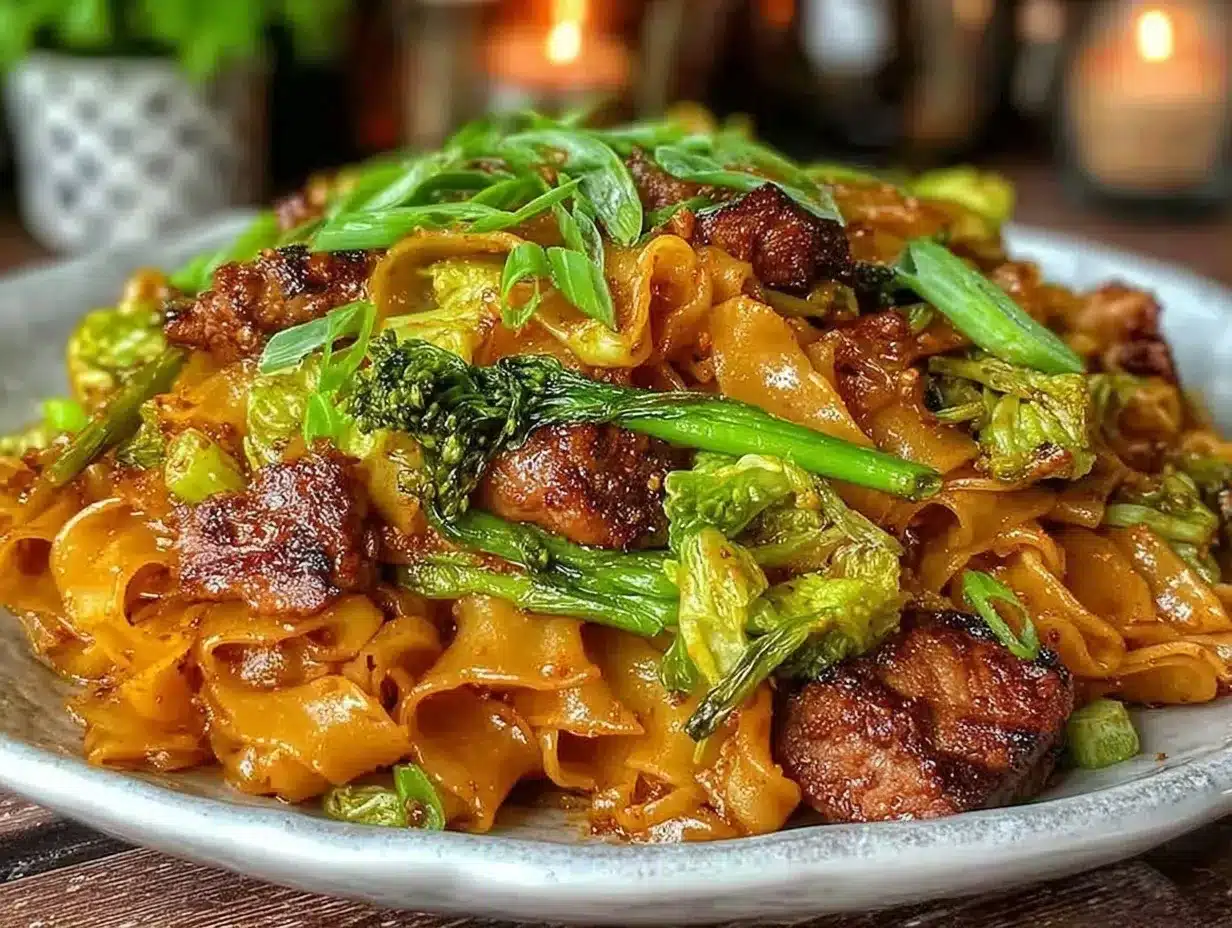
- Soften the rice noodles: If using dried, soak in warm water for 20-30 minutes until pliable but not mushy. Fresh noodles just need a quick rinse with warm water. Drain and set aside. (Approx. 30 minutes soaking)
- Prep your ingredients: Mince 3 cloves of garlic, chop 1 cup of Chinese broccoli into bite-sized pieces, and beat 2 large eggs in a small bowl.
- Heat the wok or skillet: Add 2 tablespoons of vegetable or peanut oil over medium-high heat. Once shimmering, toss in the garlic and stir-fry for about 30 seconds until fragrant but not browned.
- Add protein (optional): If using chicken or tofu, add now and stir-fry until just cooked through, about 2-3 minutes.
- Push ingredients to the side: Pour beaten eggs into the wok and scramble gently until just set but still moist. Mix with garlic and protein.
- Add the noodles: Toss in the softened rice noodles and stir-fry for 1-2 minutes, coating them evenly.
- Caramelize the soy sauce: In a small bowl, mix 2 tablespoons light soy sauce, 1 tablespoon dark soy sauce, and 1 tablespoon oyster sauce. Pour over noodles. Stir constantly, allowing the sauce to thicken and coat the noodles evenly. This step is crucial—the sauce should bubble and darken slightly without burning. (3-4 minutes)
- Add Chinese broccoli: Toss in the chopped gai lan and stir-fry for another 1-2 minutes until the greens are tender but still bright green.
- Season: Sprinkle a pinch of white pepper and adjust soy sauce if needed for saltiness or sweetness. Stir everything well.
- Final toss and serve: Give one last stir, ensuring every noodle shines with that caramelized sauce. Serve immediately while hot.
Pro tip: The key to that perfect Pad See Ew texture is not over-soaking the noodles and stir-frying on high heat to get that slight char. Keep stirring and scraping the bottom of the pan so the sauce caramelizes evenly without burning.
Cooking Tips & Techniques
Here’s what I’ve learned from many kitchen experiments with Pad See Ew noodles:
- High heat is your friend: Stir-frying at high heat helps get those signature smoky “wok hei” flavors. Just be ready to move quickly.
- Don’t over-soak noodles: Too soft noodles will break and turn mushy. They should be tender but still hold their shape.
- Caramelize carefully: The soy sauce mixture should bubble and slightly thicken, but watch closely to avoid bitterness from burning.
- Fresh garlic matters: Using fresh minced garlic makes a huge difference in aroma and flavor compared to pre-minced or powder.
- Timing the veggies: Add Chinese broccoli last to keep it crisp-tender and bright green.
- Scrape and toss: Use your spatula to scrape the bottom of the wok often, preventing sticking and encouraging caramelization.
I once tried to speed things up by using pre-cooked noodles right from the fridge, but the texture took a hit. Lesson learned: patience pays off with this dish.
Variations & Adaptations
Feel free to make this recipe your own with these variations:
- Protein swaps: Try shrimp, beef strips, or tofu for different flavors and textures.
- Vegetarian/Vegan: Replace oyster sauce with mushroom sauce, skip eggs, and load up on extra veggies like bell peppers or mushrooms.
- Gluten-free: Use tamari instead of soy sauce and confirm oyster sauce is gluten-free or use a substitute.
- Spicy kick: Add sliced fresh chili or a drizzle of chili oil for heat.
- Seasonal greens: Swap Chinese broccoli for baby bok choy, kale, or spinach depending on what’s fresh.
I personally love adding thinly sliced shiitake mushrooms sometimes for an earthy twist. It’s a simple change that adds a whole new dimension of flavor.
Serving & Storage Suggestions
Serve your Pad See Ew hot, straight from the wok, garnished with a wedge of lime or a sprinkle of crushed peanuts if you like a little crunch. Pair it with a light cucumber salad or a simple bowl of broth-based soup to round out the meal.
If you have leftovers (not that you will, but hey), store them in an airtight container in the refrigerator for up to 2 days. To reheat, gently toss in a hot skillet with a splash of water or oil to loosen the noodles and revive that signature charred flavor.
The flavors actually deepen overnight, so if you can wait, it’s worth trying the next day. Just don’t expect it to last long once you bring it out again!
Nutritional Information & Benefits
This Pad See Ew recipe offers a balanced mix of carbs from the rice noodles, protein from eggs and optional meat, and vitamins from the Chinese broccoli. One serving typically contains about 350-450 calories depending on protein and oil amounts.
Chinese broccoli is rich in vitamins A and C, plus fiber, which helps digestion. Using fresh garlic adds antioxidants and a natural immune boost. This dish is naturally gluten-free if you swap soy sauce accordingly, making it suitable for many dietary needs.
It’s a comforting meal that doesn’t feel heavy or greasy, especially if you control the oil used. I appreciate how it delivers authentic flavor without the guilt.
Conclusion
To wrap it up, this Flavorful Pad See Ew Noodles recipe with easy caramelized soy sauce is a keeper for busy cooks and flavor seekers alike. It’s quick, simple, and delivers that perfect balance of sweet, savory, and smoky notes that keep you coming back for more. Customize it with your favorite proteins or veggies, and you’ve got a versatile dish that fits any occasion.
I honestly love this recipe because it reminds me of those cozy family dinners I cherish and brings a little taste of Thailand right into my kitchen. Give it a try, and don’t hesitate to share your tweaks—there’s always room for more delicious ideas!
Go ahead, make this recipe your own, and drop a comment below to tell me how it turned out. Happy cooking!
FAQs
What type of noodles should I use for Pad See Ew?
Wide fresh rice noodles (sen yai) are traditional and give the best texture. If unavailable, dried rice noodles soaked until soft work well too.
Can I make Pad See Ew vegetarian or vegan?
Absolutely! Skip the eggs and meat, and use mushroom sauce instead of oyster sauce for a vegan-friendly version. Load up on veggies for flavor and texture.
How do I prevent the noodles from sticking together?
Soak noodles properly and toss with a bit of oil before stir-frying. Stir frequently and cook on high heat to keep them loose.
What is the secret to caramelized soy sauce?
Cooking the soy sauce mixture on high heat long enough to thicken and darken without burning creates that rich, glossy coating that clings to the noodles.
Can I prepare this dish in advance?
You can prep ingredients ahead, but for best texture, cook and serve Pad See Ew fresh. Leftovers can be refrigerated and gently reheated within 2 days.
Pin This Recipe!
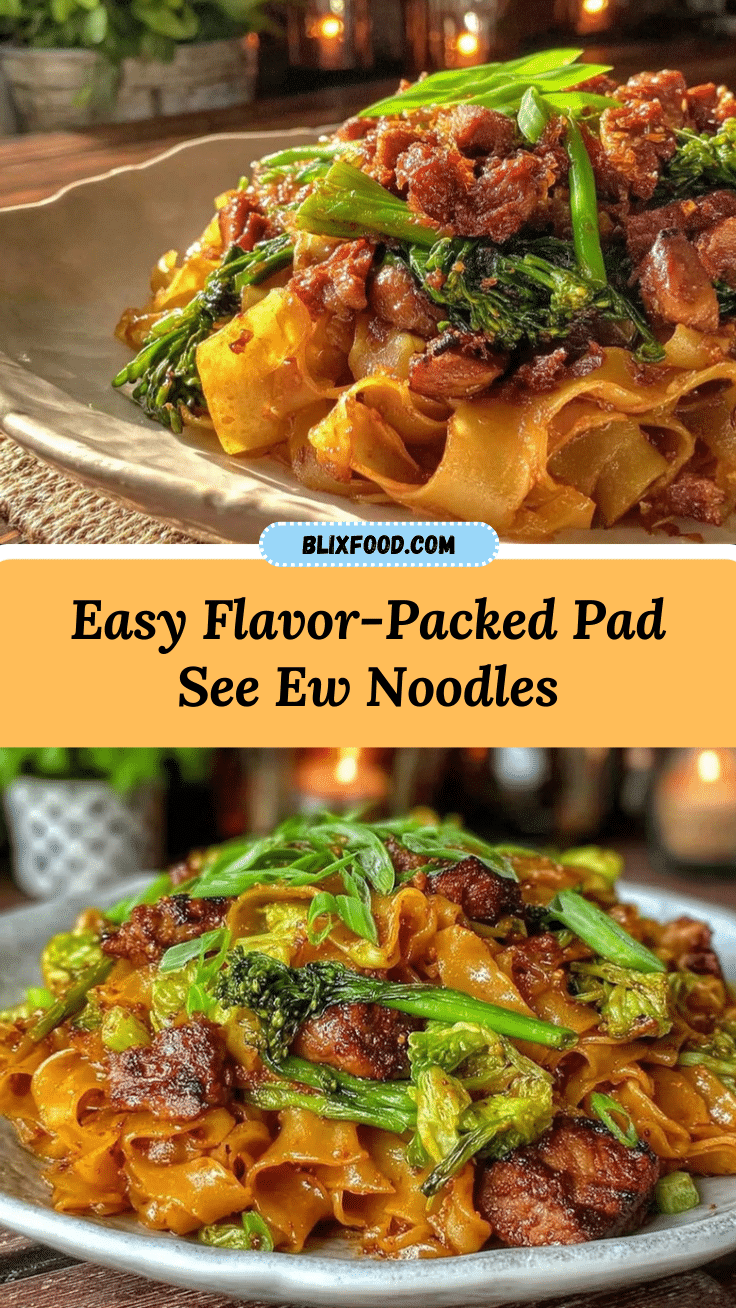
Flavorful Pad See Ew Noodles Recipe with Easy Caramelized Soy Sauce
A quick and easy Pad See Ew recipe featuring wide rice noodles stir-fried with a rich, caramelized soy sauce, fresh garlic, Chinese broccoli, and optional protein. Perfect for weeknight dinners or casual gatherings with a sweet-savory kick.
- Prep Time: 10 minutes
- Cook Time: 15 minutes
- Total Time: 25 minutes
- Yield: 4 servings 1x
- Category: Main Course
- Cuisine: Thai
Ingredients
- Wide rice noodles (sen yai), fresh or dried, softened according to package instructions
- 2 tablespoons vegetable oil or peanut oil
- 3 cloves garlic, minced
- 1 cup Chinese broccoli (gai lan), washed and chopped
- 2 large eggs, lightly beaten
- 2 tablespoons light soy sauce (low-sodium preferred)
- 1 tablespoon dark soy sauce
- 1 tablespoon oyster sauce (or vegetarian mushroom sauce for vegan)
- Pinch of white pepper
- Optional protein: thinly sliced chicken, tofu, or shrimp
Instructions
- Soften the rice noodles: soak dried noodles in warm water for 20-30 minutes until pliable but not mushy; rinse fresh noodles with warm water and drain.
- Mince garlic, chop Chinese broccoli into bite-sized pieces, and beat eggs in a small bowl.
- Heat wok or large skillet over medium-high heat and add 2 tablespoons oil.
- Add minced garlic and stir-fry for about 30 seconds until fragrant but not browned.
- Add optional protein (chicken, tofu, or shrimp) and stir-fry until just cooked through, about 2-3 minutes.
- Push ingredients to the side, pour in beaten eggs, and scramble gently until just set but still moist. Mix with garlic and protein.
- Add softened rice noodles and stir-fry for 1-2 minutes, coating evenly.
- Mix light soy sauce, dark soy sauce, and oyster sauce in a small bowl; pour over noodles and stir constantly for 3-4 minutes until sauce thickens and coats noodles without burning.
- Add chopped Chinese broccoli and stir-fry for another 1-2 minutes until tender but bright green.
- Sprinkle a pinch of white pepper and adjust soy sauce if needed; stir well.
- Give a final toss to ensure noodles are glossy and coated; serve immediately while hot.
Notes
Do not over-soak noodles to avoid mushiness. Stir-fry on high heat and scrape the pan frequently to achieve perfect caramelization without burning. Use fresh garlic for best aroma. Chinese broccoli can be substituted with baby bok choy or kale. For gluten-free, use tamari instead of soy sauce and ensure oyster sauce is gluten-free or use mushroom sauce.
Nutrition
- Serving Size: 1 serving (approxima
- Calories: 400
- Sugar: 5
- Sodium: 700
- Fat: 14
- Saturated Fat: 2
- Carbohydrates: 50
- Fiber: 3
- Protein: 12
Keywords: Pad See Ew, Thai noodles, caramelized soy sauce, stir-fry noodles, Chinese broccoli, easy dinner, weeknight meal, gluten-free option, vegetarian option