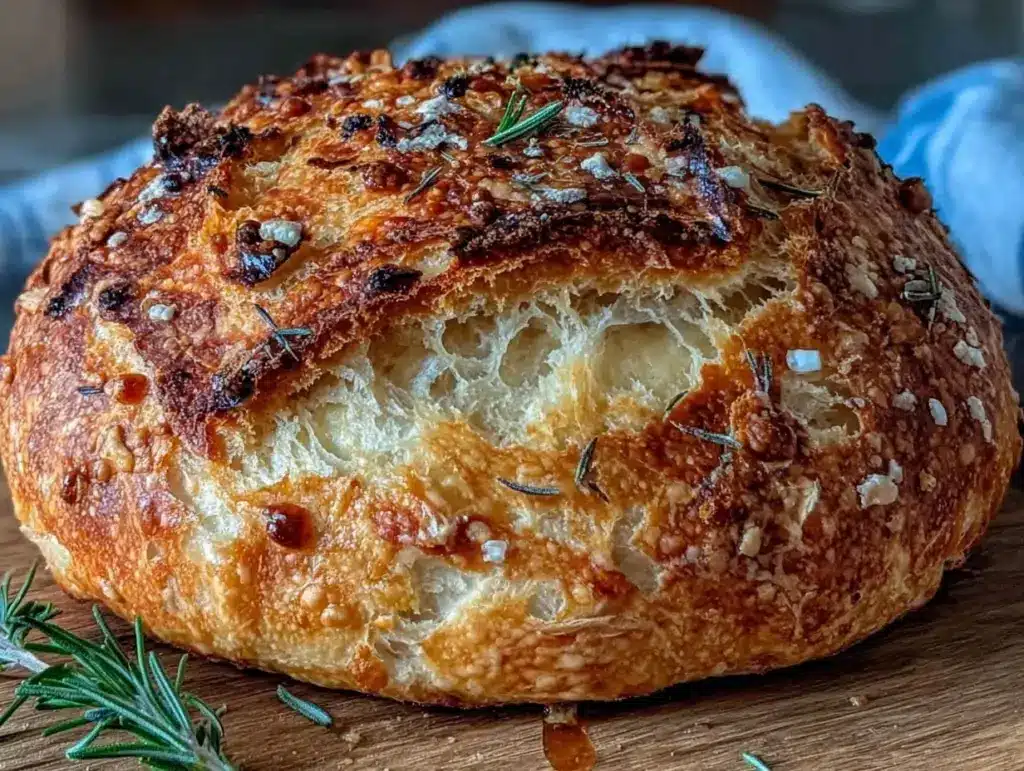
“You’ve got to try this,” my quiet next-door neighbor, Mr. Jenkins, whispered over the fence one spring evening. Now, I never pegged Mr. Jenkins as the baker type—he’s more of a lawn perfectionist—but there he was, handing me a crusty boule wrapped in a tea towel, the scent of rosemary and olive oil wafting through the air. This crispy rosemary olive oil sourdough boule was an unexpected treasure, born from his grandmother’s old-school recipe, scribbled on a faded index card. Honestly, I was skeptical at first. I mean, sourdough can be tricky, and I’d messed up more than one batch before. But that boule? It was magic in crust and crumb.
One evening, I tried to replicate it, but midway I realized I’d forgotten to add yeast—and yet, somehow, the bread still rose beautifully, thanks to the wild sourdough starter bubbling away in my fridge. The kitchen was a mess, flour dust everywhere, and my cat decided the dough was a new toy. Yet, that batch turned out to be one of the crispiest, most fragrant loaves I’d ever tasted, with that perfect balance of olive oil richness and rosemary’s piney aroma.
Maybe you’ve been there—dreaming of homemade bread that’s both rustic and refined, with a crackling crust and tender inside. This recipe stayed with me because it’s forgiving, approachable, and honestly, it smells like a cozy Mediterranean afternoon in your own kitchen. I keep making it, even on chaotic weeknights, because that crispy rosemary olive oil sourdough boule feels like a little celebration every time.
Why You’ll Love This Crispy Rosemary Olive Oil Sourdough Boule Recipe
This recipe isn’t just another loaf—it’s a blend of tradition, flavor, and simplicity that I’ve refined through trial, error, and a few flour-covered late nights. Here’s why it’s become a kitchen staple:
- Quick & Easy: While sourdough needs some patience, the hands-on time is minimal—perfect for busy evenings or weekend baking rituals.
- Simple Ingredients: No need for fancy or hard-to-find items. Olive oil, fresh rosemary, basic flour, and a lively sourdough starter are all you need.
- Perfect for Sharing: Whether brunch with friends or a casual dinner, this boule impresses without any fuss.
- Crowd-Pleaser: The crispy crust and fragrant rosemary always get compliments, even from folks who usually shy away from homemade bread.
- Unbelievably Delicious: The olive oil adds a subtle richness that keeps the crumb soft, while the rosemary infuses an herbaceous note that’s irresistible.
What sets this recipe apart is the way the olive oil is gently folded into the dough, creating a tender crumb that contrasts beautifully with the golden, crackling crust. Plus, the rosemary isn’t overpowering—it’s just enough to hint at the Mediterranean without stealing the show. It’s the kind of bread that makes you close your eyes after the first bite and savor the moment. Honestly, it’s my go-to when I want a slice of comfort with a gourmet touch.
What Ingredients You Will Need
This crispy rosemary olive oil sourdough boule uses straightforward ingredients that work together for bold flavor and satisfying texture without any fuss. Most are pantry staples or easy to find at your local store.
- Active sourdough starter (about 100g / 3.5 oz, bubbly and fed within the last 6-8 hours) – the heartbeat of the bread
- Unbleached all-purpose flour (500g / 4 cups) – I prefer Bob’s Red Mill for consistent texture
- Filtered water (350g / 1 ½ cups), lukewarm – helps activate the yeast naturally
- Fine sea salt (10g / 2 tsp) – balances and enhances flavor
- Extra virgin olive oil (50g / 3 tbsp) – contributes richness and a tender crumb (I love Colavita for its fruity notes)
- Fresh rosemary leaves (2 tbsp, finely chopped) – brings that piney, aromatic punch
Optional ingredients or substitutions:
- Whole wheat flour (swap up to 100g / ¾ cup for a nuttier flavor)
- Rosemary sprigs for garnish before baking (adds a pretty rustic look)
- Use gluten-free flour blend and gluten-free starter for a gluten-free version, though texture will vary
Equipment Needed
- Mixing bowl: Large and sturdy for the dough to expand comfortably. Glass or stainless steel works best.
- Dough scraper or spatula: Essential for folding and handling sticky dough.
- Kitchen scale: Accurate measurements are key for sourdough success.
- Proofing basket (banneton): Helps shape the boule and supports the dough during its final rise. No basket? Use a bowl lined with a clean kitchen towel dusted with flour.
- Dutch oven or heavy oven-safe pot with lid: Crucial for creating steam and achieving that crackly crust. If you lack one, a baking stone and a tray of water on the oven bottom can work as a budget-friendly alternative.
- Pastry brush: For brushing olive oil on the crust before baking—optional but recommended.
Pro tip: I keep a dedicated sourdough starter jar and clean my banneton with a dry brush only; moisture can ruin the natural linen. My budget-friendly tip is to line any bowl with a heavily floured towel if you don’t want to invest in a banneton yet.
Preparation Method
- Feed your starter: About 6-8 hours before mixing, feed your sourdough starter so it’s bubbly and active. You want a lively starter for the best rise.
- Mix the dough: In your large mixing bowl, combine 500g (4 cups) flour and 350g (1 ½ cups) lukewarm filtered water. Stir until no dry flour remains (about 30 seconds). Cover with a towel and let it rest for 45 minutes (this autolyse step helps develop gluten).
- Add starter, salt, olive oil, and rosemary: Add 100g (3.5 oz) active starter, 10g (2 tsp) salt, 50g (3 tbsp) extra virgin olive oil, and 2 tbsp finely chopped fresh rosemary to the dough. Mix thoroughly using your hands or a dough scraper until everything is fully incorporated (about 3-5 minutes). The dough will be sticky but elastic.
- Bulk fermentation and folds: Cover the bowl with a damp towel. Every 30 minutes for the next 2 hours, perform a set of stretch-and-folds: reach under the dough, stretch it upward, and fold it over itself. This strengthens the dough. After the final fold, let it rest until doubled in size (about 2-3 hours total, depending on room temperature).
- Shape the boule: Lightly flour your work surface. Gently tip the dough out and shape it into a tight round ball by folding edges towards the center, then flipping it seam-side down and cupping your hands to tighten the surface.
- Final proof: Place the shaped dough seam-side up in a floured banneton or bowl lined with a heavily floured kitchen towel. Cover and let rise for 1.5 to 2 hours until it’s puffy but not overproofed.
- Preheat the oven: Place your Dutch oven with its lid inside your oven and preheat to 475°F (245°C) for at least 30 minutes before baking. This ensures a hot environment to create steam.
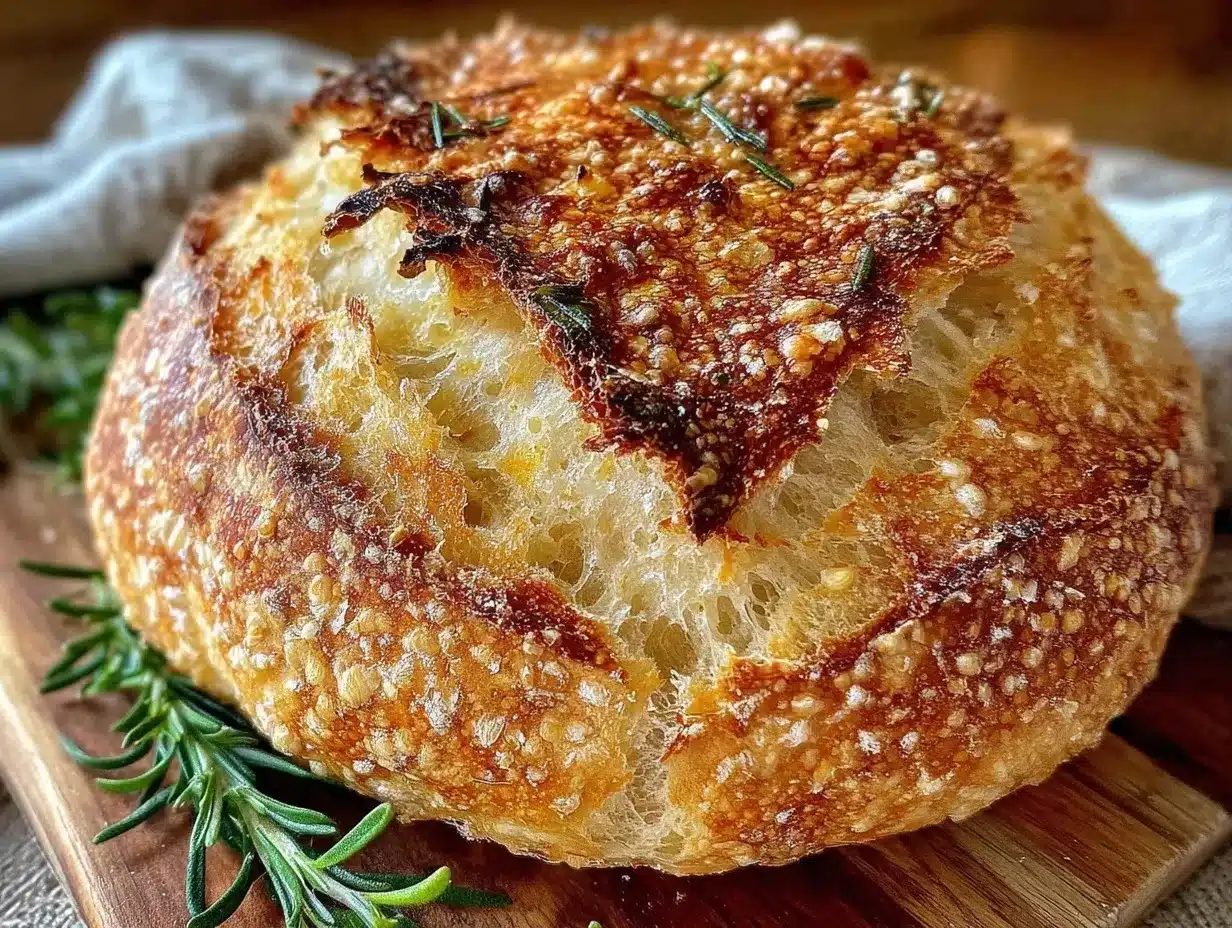
- Score and bake: Carefully invert the boule onto parchment paper. Using a sharp blade or lame, score a deep cross or swirl on the surface. Brush lightly with olive oil and sprinkle a few rosemary leaves on top if desired. Transfer the dough with parchment into the hot Dutch oven, cover with the lid, and bake for 20 minutes.
- Finish baking: Remove the lid and bake for another 20-25 minutes, or until the crust is deeply golden and crisp.
- Cool completely: Remove the bread and let it cool on a wire rack for at least an hour before slicing. This step is crucial so the crumb sets perfectly.
Tip: If your dough feels overly sticky, dust your hands with flour but don’t overdo it—too much flour will toughen the crumb. Also, scoring the boule deeply helps it expand nicely without bursting unpredictably.
Cooking Tips & Techniques for Perfect Sourdough Boule
Let me share some nuggets of wisdom I picked up from countless batches—some triumphant, some less so.
- Use a kitchen scale: Measuring by weight is a game-changer for sourdough consistency. Cups can be deceiving!
- Water temperature matters: Lukewarm water (around 78°F/25°C) activates the starter without killing the yeast.
- Don’t rush fermentation: Patience is key. Underproofed dough won’t rise well; overproofed dough can collapse. Look for a puffy, slightly domed dough that springs back slowly when poked.
- Steam is your friend: Baking in a covered Dutch oven traps steam, helping crust development. If you don’t have one, try placing a pan of hot water in the oven to mimic this effect.
- Scoring technique: Use a very sharp blade and score quickly to prevent dough from deflating. The pattern guides where the dough expands during baking.
- Olive oil brushing: Adds shine and extra crispiness. Brush right before baking for best effect.
One time, I forgot to preheat the Dutch oven and ended up with a dense loaf. Lesson learned: a hot vessel is essential for that crispy crust. Also, I learned that folding the dough multiple times during bulk fermentation builds gluten strength without kneading—a big time saver!
Variations & Adaptations
Feel free to tweak this crispy rosemary olive oil sourdough boule to suit your taste or dietary needs:
- Garlic-Rosemary Twist: Add 2 cloves of finely minced garlic to the dough for an aromatic punch.
- Whole Grain Boost: Substitute up to 150g (1 ¼ cups) of flour with whole wheat or spelt flour for a nuttier flavor and heartier texture.
- Gluten-Free Version: Use a gluten-free flour blend and a gluten-free sourdough starter. Expect a denser crumb and adjust hydration accordingly.
- Olive Variations: Fold in ½ cup of chopped Kalamata olives to add a salty, briny surprise.
- Herb Swap: Use fresh thyme, sage, or a combo with rosemary for a different flavor profile.
I once added lemon zest with the rosemary, and the fresh brightness was a delightful surprise—try that if you want a subtle citrus lift!
Serving & Storage Suggestions
This crispy rosemary olive oil sourdough boule is best served once fully cooled. The crust stays crisp and the crumb tender, perfect for slicing thick or thin.
- Serving ideas: Enjoy warm with butter and sea salt, or alongside soups, salads, and charcuterie boards.
- Storage: Wrap in a clean kitchen towel and store at room temperature for up to 2 days.
- Freezing: Slice the loaf and freeze in airtight bags for up to 3 months. Toast slices directly from frozen for a fresh-baked taste.
- Reheating: Warm the loaf in a 350°F (175°C) oven for 10 minutes to revive crispness.
Over time, the flavors meld beautifully, especially if you add a pat of butter or a drizzle of good olive oil when serving. Trust me, you’ll find excuses to nibble this boule any time of day.
Nutritional Information & Benefits
Per serving (1 slice, approx 60g):
| Calories | 160 |
|---|---|
| Carbohydrates | 30g |
| Protein | 5g |
| Fat | 3.5g (mostly from olive oil) |
| Fiber | 2g |
Key benefits:
- Olive oil: Rich in heart-healthy monounsaturated fats and antioxidants.
- Rosemary: Contains anti-inflammatory compounds and adds antioxidant properties.
- Sourdough fermentation: May aid digestion and improve nutrient absorption compared to regular bread.
This recipe is naturally free from dairy and refined sugars, making it a wholesome choice. Just watch out for gluten if you have sensitivities.
Conclusion
This crispy rosemary olive oil sourdough boule is a wonderful blend of rustic charm and gourmet flavor that invites you to slow down and savor each bite. Its approachable process and simple ingredients make it a joy to bake, even if you’re new to sourdough. I love how it brings my kitchen alive with its aroma and transforms everyday meals into something special. Give it a try, tweak it to your liking, and let me know how your boule turned out—I’m always excited to hear your variations and stories! Baking bread is a journey, and this recipe makes it one that’s rewarding every time.
So, grab your mixing bowl and your favorite rosemary sprigs—this boule might just become your new favorite too.
FAQs About Crispy Rosemary Olive Oil Sourdough Boule
How long does the sourdough boule stay fresh?
Stored at room temperature wrapped in a towel, it stays fresh for 2-3 days. For longer storage, freezing slices is best.
Can I use dried rosemary instead of fresh?
Yes, but use about 1 tablespoon dried rosemary as it’s more concentrated. Fresh rosemary gives the best aroma and texture.
What if I don’t have a Dutch oven?
Use a baking stone or heavy tray and place a pan of hot water in the oven to create steam. It won’t be quite the same, but still delicious.
How can I tell when my sourdough starter is ready to use?
It should be bubbly, doubled in size, and float when dropped in water. If it’s sluggish, feed it again and wait.
Can I make this bread without a sourdough starter?
You can use commercial yeast instead (about 2 tsp active dry yeast), but it won’t have that signature sourdough tang or texture.
Pin This Recipe!
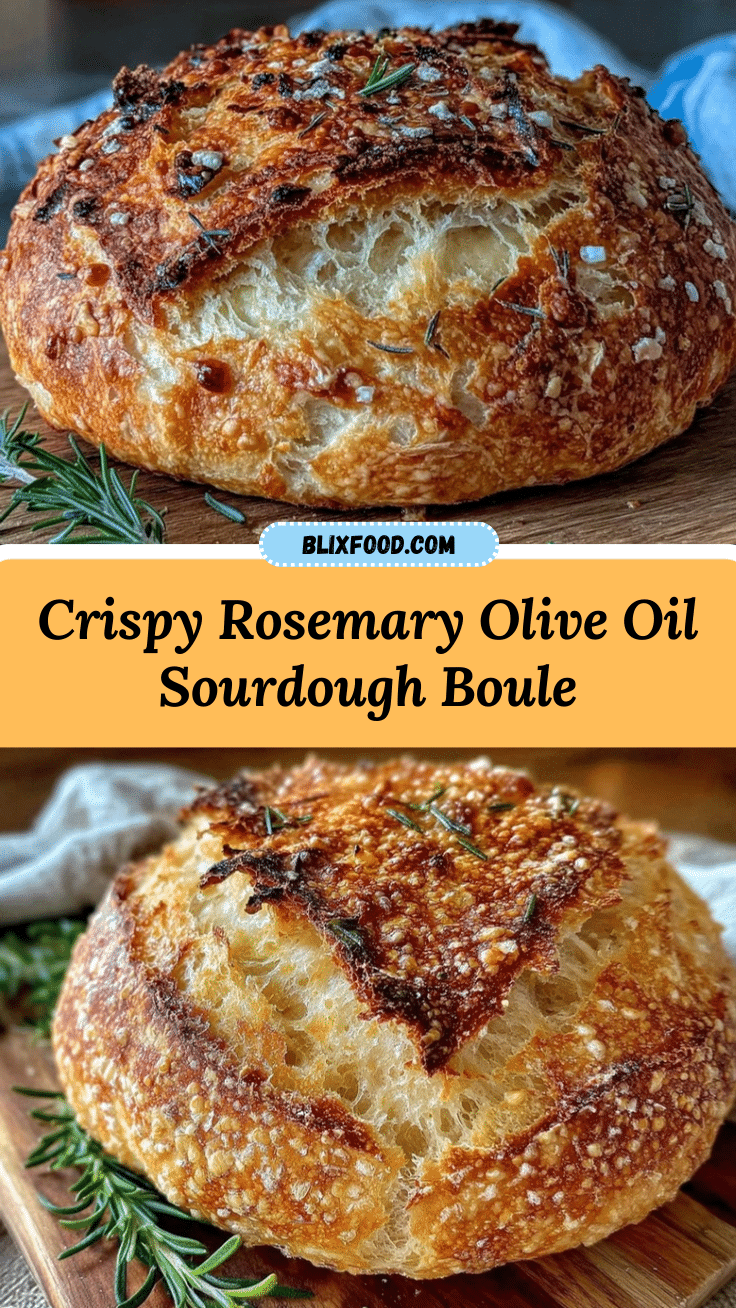
Crispy Rosemary Olive Oil Sourdough Boule
A rustic and fragrant sourdough boule infused with fresh rosemary and rich olive oil, featuring a crispy crust and tender crumb. This approachable recipe uses simple ingredients and traditional techniques for a delicious homemade bread.
- Prep Time: 15 minutes (hands-on time)
- Cook Time: 45 minutes
- Total Time: 4 to 5 hours (including fermentation and proofing)
- Yield: 1 boule (about 8-10 servings) 1x
- Category: Bread
- Cuisine: Mediterranean
Ingredients
- 100g (3.5 oz) active sourdough starter, bubbly and fed within the last 6-8 hours
- 500g (4 cups) unbleached all-purpose flour
- 350g (1 ½ cups) lukewarm filtered water
- 10g (2 tsp) fine sea salt
- 50g (3 tbsp) extra virgin olive oil
- 2 tbsp fresh rosemary leaves, finely chopped
- Optional: up to 100g (¾ cup) whole wheat flour to substitute for part of the all-purpose flour
- Optional: rosemary sprigs for garnish
- Optional gluten-free flour blend and gluten-free starter for gluten-free version
Instructions
- Feed your starter about 6-8 hours before mixing so it’s bubbly and active.
- In a large mixing bowl, combine 500g (4 cups) flour and 350g (1 ½ cups) lukewarm filtered water. Stir until no dry flour remains (about 30 seconds). Cover with a towel and let rest for 45 minutes (autolyse).
- Add 100g (3.5 oz) active starter, 10g (2 tsp) salt, 50g (3 tbsp) extra virgin olive oil, and 2 tbsp finely chopped fresh rosemary to the dough. Mix thoroughly by hand or with a dough scraper until fully incorporated (3-5 minutes).
- Cover the bowl with a damp towel. Every 30 minutes for 2 hours, perform stretch-and-folds to strengthen the dough. After the final fold, let rest until doubled in size (about 2-3 hours total).
- Lightly flour your work surface. Gently tip the dough out and shape into a tight round boule by folding edges toward the center, then flipping seam-side down and tightening the surface.
- Place the shaped dough seam-side up in a floured banneton or bowl lined with a heavily floured kitchen towel. Cover and let rise for 1.5 to 2 hours until puffy but not overproofed.
- Preheat the oven to 475°F (245°C) with a Dutch oven and lid inside for at least 30 minutes.
- Invert the boule onto parchment paper. Score a deep cross or swirl on the surface with a sharp blade. Brush lightly with olive oil and sprinkle rosemary leaves if desired.
- Transfer the dough with parchment into the hot Dutch oven, cover with lid, and bake for 20 minutes.
- Remove the lid and bake for another 20-25 minutes until crust is deeply golden and crisp.
- Remove bread and cool completely on a wire rack for at least 1 hour before slicing.
Notes
Use lukewarm water (~78°F/25°C) to activate the starter without killing yeast. Perform stretch-and-folds every 30 minutes during bulk fermentation to build gluten strength without kneading. Preheat Dutch oven thoroughly for steam and crust development. Score deeply and brush with olive oil before baking for best crust. Cool completely before slicing to set crumb. For gluten-free version, use gluten-free flour blend and starter but expect different texture.
Nutrition
- Serving Size: 1 slice (approx 60g)
- Calories: 160
- Fat: 3.5
- Carbohydrates: 30
- Fiber: 2
- Protein: 5
Keywords: sourdough bread, rosemary bread, olive oil bread, homemade bread, crispy crust, boule, artisan bread