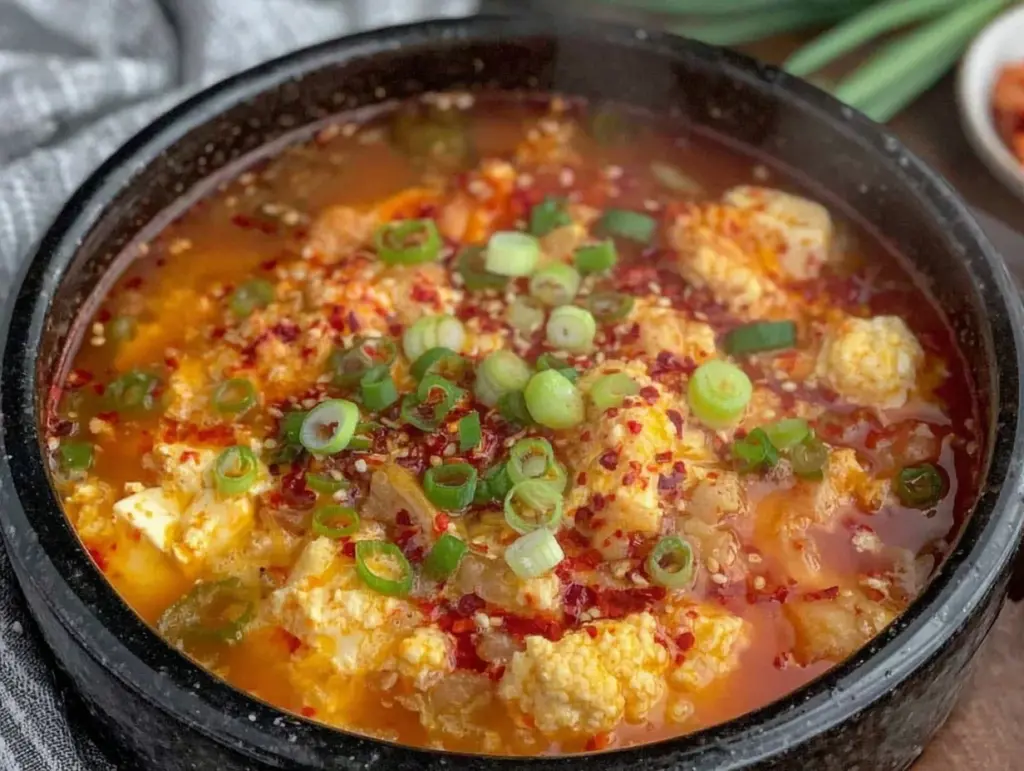
“You know that moment when a simple craving turns into a full-on kitchen adventure? Well, last Thursday night, I found myself staring at a nearly empty fridge and a stubborn itch for something warm, spicy, and utterly comforting. I wasn’t expecting much, honestly—I just wanted to make do. But then, as I rummaged through my pantry and freezer, I stumbled upon a small tub of silken tofu and a jar of Korean chili paste that had been hiding in the back for months. That’s when I decided to whip up a batch of spicy Korean tofu soup, or sundubu-jjigae, with whatever I had on hand.
The sizzle of garlic hitting the hot pot, the bubbling of the fiery broth, and the soft, silky tofu melting in my mouth—let me tell you, it was a beautiful mess. I even forgot to set the timer, so it simmered a little longer than planned, but somehow that made the flavors even richer. Maybe you’ve been there too—trying to recreate a dish with limited ingredients yet ending up with something surprisingly delicious? This recipe stuck with me because it’s easy, flexible, and packs a punch without needing a million ingredients or hours of prep. It’s honest, soulful food that you can make on a whim, and it’s perfect for those nights when you want comfort but don’t want to fuss.”
Why You’ll Love This Recipe
Spicy Korean tofu soup, or sundubu-jjigae, stands out because it’s both incredibly simple and deeply satisfying. After testing this recipe multiple times (and yes, some batches were definitely spicier than others!), I’ve honed a version that’s easy to pull together but full of bold flavors you’ll crave again and again. Here’s why this recipe makes my regular rotation:
- Quick & Easy: Ready in under 30 minutes, perfect for busy weeknights or late-night hunger pangs.
- Simple Ingredients: Uses pantry staples like gochujang (Korean chili paste) and silken tofu, which you can find at most Asian grocery stores or online.
- Perfect for Cozy Dinners: The spicy warmth of the broth is just what you want when the weather dips or you need a little pick-me-up.
- Crowd-Pleaser: Mildly spicy yet comforting, it’s a hit with both spice lovers and those who prefer a gentler heat.
- Unbelievably Delicious: The mix of silky tofu, umami-rich broth, and a hint of sesame oil keeps every spoonful interesting.
What makes this recipe different? I blend traditional Korean flavors with a few home-cook tweaks—like using vegetable broth for a lighter feel or adding mushrooms to boost earthiness. I also recommend gently simmering the soup to keep the tofu intact and silky, which is the hallmark of a great sundubu-jjigae. Honestly, it’s the kind of dish that closes your eyes with satisfaction after one bite, but you’ll want to savor every spoonful.
What Ingredients You Will Need
This sundubu-jjigae recipe relies on straightforward, wholesome ingredients that come together beautifully without fuss. Most are pantry staples or easy-to-find items at your local market or Asian grocery store.
- Soft Silken Tofu: One 14-ounce (400g) tub, drained gently (use small-curd, soft tofu for that melt-in-your-mouth texture).
- Vegetable or Anchovy Broth: 3 cups (720 ml) – I prefer homemade vegetable broth or a mild anchovy broth for authentic umami.
- Gochujang (Korean Chili Paste): 1 to 2 tablespoons (adjust to your heat preference) – I recommend Chung Jung One brand for balanced flavor.
- Gochugaru (Korean Chili Flakes): 1 teaspoon – adds smoky heat, optional if you want extra spice.
- Garlic: 3 cloves, minced (adds a fragrant base).
- Onion: 1 small, finely chopped (for sweetness and depth).
- Green Onion: 2 stalks, sliced thinly (garnish and flavor).
- Mushrooms: ½ cup sliced shiitake or button mushrooms (optional but adds earthiness).
- Soy Sauce: 1 tablespoon (for seasoning).
- Sesame Oil: 1 teaspoon (for finishing aroma).
- Egg: 1 large (optional, cracked gently into the soup for richness).
- Salt and Pepper: To taste.
- Optional Protein: Small amounts of seafood (clams or shrimp) or thinly sliced pork belly work great if you want to customize.
Feel free to swap vegetable broth for chicken broth if you prefer, or use coconut aminos instead of soy sauce for a gluten-free twist. You can find gochujang in most Asian markets; if you’re new to it, start with less and add more after tasting.
Equipment Needed
- Medium-sized Pot or Korean Earthenware Pot (ttukbaegi): Perfect for cooking and serving sundubu-jjigae, but a regular heavy-bottomed pot works well too.
- Wooden Spoon or Ladle: For stirring and serving.
- Sharp Knife and Cutting Board: To prep garlic, onions, and mushrooms.
- Measuring Spoons and Cups: For precise seasoning.
- Optional: A small bowl for cracking the egg separately before adding it to the soup.
If you don’t have a Korean earthenware pot, no worries. Just use a thick-bottomed saucepan to keep heat consistent. I’ve tried both, and while the traditional pot keeps the soup hot longer at the table, the saucepan gets the job done fine. Also, a good sharp knife will save you frustration when slicing mushrooms or chopping garlic—trust me on this one!
Preparation Method
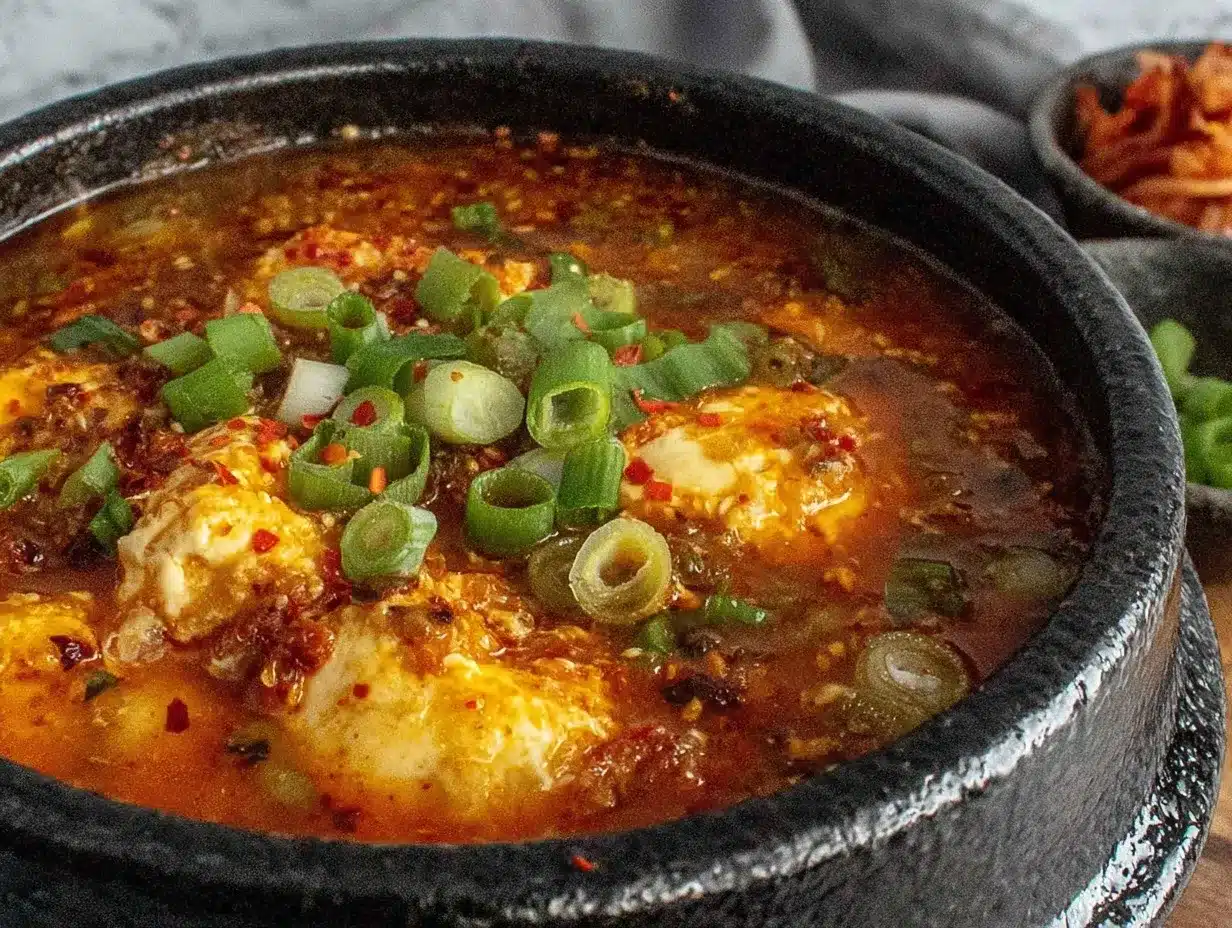
- Prepare the Broth Base (5 minutes): In your pot, heat 1 teaspoon of sesame oil over medium heat. Add the minced garlic and chopped onion; sauté until fragrant and translucent, about 2-3 minutes. You’ll notice a lovely aroma filling the kitchen—that’s a good sign!
- Add Chili Paste and Flakes (2 minutes): Stir in 1 to 2 tablespoons of gochujang and 1 teaspoon of gochugaru if using. Cook for about 1-2 minutes, stirring constantly to toast the chili paste slightly. This step brings out the deep flavors and bright red color.
- Pour in Broth and Bring to a Simmer (10 minutes): Add 3 cups (720 ml) of broth to the pot. Increase the heat to medium-high and bring the mixture to a gentle boil. Once boiling, reduce heat to medium-low and let simmer for 5 minutes to meld flavors. At this point, taste the broth and add soy sauce and salt if necessary.
- Add Mushrooms and Optional Protein (3 minutes): Toss in sliced mushrooms and any protein you like (e.g., seafood or pork). Let it cook for 3-5 minutes until the protein is just done and mushrooms softened.
- Gently Add Silken Tofu (2 minutes): Carefully spoon the soft tofu into the pot in large chunks, trying not to break it up too much. Let it warm through for about 2 minutes without stirring. The tofu should stay silky and intact.
- Crack in the Egg (Optional, 1 minute): Crack one egg directly into the simmering soup. Cover the pot with a lid and let it poach for 1-2 minutes until the white is just set but the yolk remains runny. This adds a luxurious texture.
- Finish and Garnish: Sprinkle sliced green onions on top and drizzle with a little more sesame oil if you like. Serve immediately with steamed rice on the side.
Pro tip: If you want your soup spicier or milder, adjust the gochujang and gochugaru amounts before simmering. Also, handle the tofu gently to keep those silky chunks intact—they’re the star of the show!
Cooking Tips & Techniques
Here’s what I’ve learned after a few dozen batches of this spicy Korean tofu soup:
- Don’t Rush the Chili Paste Step: Toasting the gochujang briefly with garlic and onion wakes up the flavor, so don’t skip or rush this part.
- Use Fresh Broth: A homemade or high-quality store-bought broth makes a noticeable difference. Avoid overly salty or artificial-tasting broths.
- Handle Silken Tofu Gently: It’s delicate, so add it at the end and avoid stirring too vigorously to keep the texture smooth and pleasing.
- Simmer, Don’t Boil Hard: A gentle simmer helps flavors blend without breaking down the tofu or overcooking the egg.
- Multitask Smartly: While the broth simmers, prep your rice or side dishes. This keeps things efficient and warm for serving.
- Common Mistake: Adding the egg too early or stirring it in can ruin the texture. Crack it in gently and cover the pot for perfect poaching.
Variations & Adaptations
This spicy Korean tofu soup recipe is surprisingly versatile. Here are some ways to make it your own:
- Vegetarian/Vegan: Use vegetable broth and skip the egg. Add extra mushrooms or zucchini for more body.
- Seafood Lover’s Version: Add clams, shrimp, or small pieces of fish for an ocean twist.
- Low-Sodium: Opt for low-sodium soy sauce and broth, and taste as you go to keep salt balanced.
- Less Spicy: Cut back on gochujang and omit gochugaru; add a splash of mild chili oil if you want a hint of heat without overwhelming.
- Gluten-Free: Use tamari instead of soy sauce and check that your gochujang is gluten-free (some brands have wheat).
- Personal Favorite: I like to add a handful of kimchi just before serving for a fermented tang that wakes up the whole bowl.
Serving & Storage Suggestions
This soup is best served piping hot, straight from the pot, with steamed white rice or short-grain brown rice on the side. I usually ladle it into individual bowls, garnish with fresh green onions, and let everyone add their own egg if desired.
Leftovers keep well in an airtight container in the fridge for up to 3 days. When reheating, warm gently on the stove to avoid breaking up the tofu too much. Add a splash of water or broth if it thickened too much in the fridge.
The flavors often deepen after a day, so if you have time, let it sit overnight. Just remember that the tofu will soften further and the spice might mellow slightly.
Nutritional Information & Benefits
This sundubu-jjigae recipe provides a comforting, protein-packed meal with relatively low calories. Silken tofu is a great source of plant-based protein and calcium, while the broth offers hydration and minerals. The garlic and chili paste add antioxidants and anti-inflammatory compounds, which can be beneficial for digestion and immunity.
It’s naturally gluten-free if you choose the right soy sauce and gochujang, and it’s low in carbs, making it suitable for many dietary preferences. Just watch the sodium levels if you use pre-made broth or soy sauce.
Conclusion
If you’re looking for a homemade spicy Korean tofu soup recipe that’s fast, flavorful, and forgiving, this sundubu-jjigae is a winner. It’s the kind of dish that feels fancy but comes together with pantry staples and a few fresh ingredients. Honestly, I keep coming back to it on chilly nights or when I want a simple meal that still feels special.
Feel free to adjust the heat, toss in your favorite veggies, or add a twist with seafood or kimchi. And hey, if you try it, I’d love to hear about your variations or any little kitchen mishaps you had (because, let’s face it, cooking is always an adventure). Drop a comment below or share your experience—I’m all ears!
Happy cooking and stay spicy!
Frequently Asked Questions
What type of tofu is best for sundubu-jjigae?
Use soft or silken tofu (also called sundubu) for the signature silky texture. Firm tofu won’t give you the same melt-in-your-mouth feel.
Can I make sundubu-jjigae without gochujang?
Gochujang provides the core spicy, sweet, and savory flavor, but you can substitute with a mix of chili flakes and miso paste for a different twist.
Is sundubu-jjigae spicy for everyone?
The heat level varies by how much gochujang and chili flakes you add. Start with less and adjust to taste, especially if you’re new to Korean spice.
Can I prepare this soup ahead of time?
You can make the broth and prep ingredients ahead, but add tofu and egg just before serving to keep the textures perfect.
What should I serve with spicy Korean tofu soup?
Steamed rice is traditional, but you can also serve it with Korean side dishes like kimchi, pickled radish, or simple steamed vegetables.
Pin This Recipe!
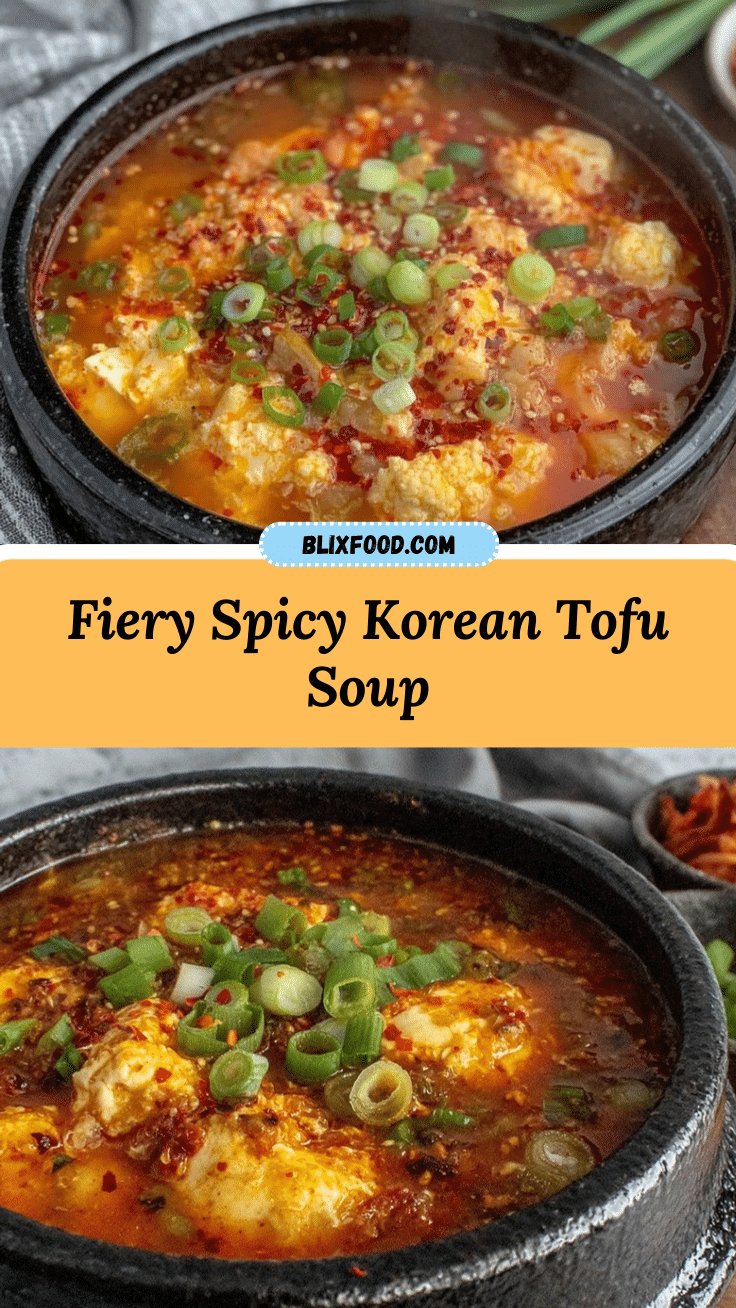
Spicy Korean Tofu Soup Recipe Sundubu-jjigae Easy Homemade Guide

A quick and easy spicy Korean tofu soup (sundubu-jjigae) that is comforting, flavorful, and perfect for cozy dinners. Made with silken tofu, Korean chili paste, and a rich umami broth.
- Prep Time: 10 minutes
- Cook Time: 20 minutes
- Total Time: 30 minutes
- Yield: 2-3 servings 1x
- Category: Main Course
- Cuisine: Korean
Ingredients
- 1 (14-ounce) tub soft silken tofu, drained gently
- 3 cups vegetable or anchovy broth
- 1 to 2 tablespoons gochujang (Korean chili paste)
- 1 teaspoon gochugaru (Korean chili flakes), optional
- 3 cloves garlic, minced
- 1 small onion, finely chopped
- 2 stalks green onion, sliced thinly
- ½ cup sliced shiitake or button mushrooms, optional
- 1 tablespoon soy sauce
- 1 teaspoon sesame oil
- 1 large egg, optional
- Salt and pepper to taste
- Optional protein: small amounts of seafood (clams or shrimp) or thinly sliced pork belly
Instructions
- Prepare the Broth Base: Heat 1 teaspoon sesame oil in a pot over medium heat. Add minced garlic and chopped onion; sauté until fragrant and translucent, about 2-3 minutes.
- Add Chili Paste and Flakes: Stir in 1 to 2 tablespoons gochujang and 1 teaspoon gochugaru if using. Cook for 1-2 minutes, stirring constantly to toast the chili paste slightly.
- Pour in Broth and Bring to a Simmer: Add 3 cups broth. Increase heat to medium-high and bring to a gentle boil. Reduce heat to medium-low and simmer for 5 minutes. Taste and add soy sauce and salt if needed.
- Add Mushrooms and Optional Protein: Add sliced mushrooms and any protein. Cook for 3-5 minutes until protein is done and mushrooms softened.
- Gently Add Silken Tofu: Spoon tofu into the pot in large chunks without breaking it. Warm through for about 2 minutes without stirring.
- Crack in the Egg (Optional): Crack one egg into the simmering soup. Cover and poach for 1-2 minutes until white is set but yolk remains runny.
- Finish and Garnish: Sprinkle sliced green onions on top and drizzle with a little more sesame oil. Serve immediately with steamed rice.
Notes
Toast the gochujang briefly with garlic and onion to enhance flavor. Handle silken tofu gently to keep it intact. Simmer gently to blend flavors without breaking tofu or overcooking egg. Adjust spice level by varying gochujang and gochugaru amounts. Use fresh, high-quality broth for best taste. Leftovers keep well refrigerated for up to 3 days; reheat gently.
Nutrition
- Serving Size: About 1 bowl (approx
- Calories: 220
- Sugar: 3
- Sodium: 700
- Fat: 10
- Saturated Fat: 1.5
- Carbohydrates: 15
- Fiber: 2
- Protein: 15
Keywords: spicy Korean tofu soup, sundubu-jjigae, Korean chili paste, silken tofu soup, easy Korean soup, Korean comfort food