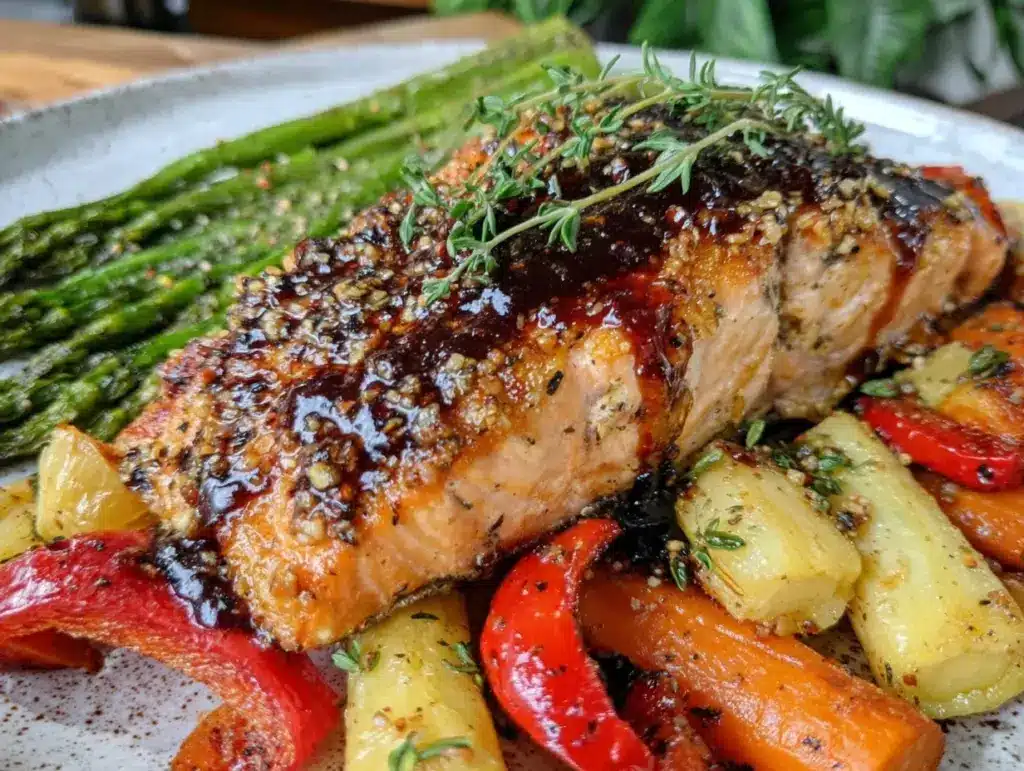
“You know that moment when the unexpected happens in the kitchen, and suddenly dinner turns into something memorable?” That’s exactly what went down one Tuesday evening last fall. I was juggling too many things, had forgotten to thaw the chicken I planned to cook, and honestly, the fridge was looking pretty sparse. Then I spotted a bottle of balsamic vinegar and some fresh salmon fillets I’d picked up from the farmers market earlier that week. I grabbed whatever vegetables were lying around — a few carrots, a couple of bell peppers, and some baby potatoes — and started improvising.
Honestly, it was a bit of a mess at first. I dropped the salmon skin-side down on the floor (classic me), and the kitchen timer went off at the wrong moment, making me scramble. But the smell of the balsamic glaze thickening on the stove was just irresistible. That evening, the sweet and tangy glaze paired with perfectly roasted veggies surprised everyone at the table (including me!). It’s become one of those recipes I keep coming back to, especially when life’s a little hectic but I still want a wholesome, tasty meal.
Maybe you’ve been there too — staring into the fridge, wondering what on earth you can whip up that feels special without hours of prep. This balsamic glazed salmon with roasted vegetables is exactly that kind of recipe. It’s straightforward, full of flavor, and honestly, it feels a bit fancy without the fuss. Let me tell you, once you taste that sticky-sweet glaze married with the rich salmon and caramelized veggies, you’ll understand why it refuses to leave my dinner rotation.
Why You’ll Love This Recipe
This balsamic glazed salmon with roasted vegetables isn’t just another fish dish; it’s a combination that hits all the right notes. I tested this recipe a bunch of times (okay, maybe more than a bunch — I have a tendency to get a bit obsessed), tweaking the glaze and roasting times until it was just right. Here’s why it might become your go-to too:
- Quick & Easy: Ready in under 40 minutes, perfect for busy weeknights or unexpected guests.
- Simple Ingredients: Uses pantry staples and fresh produce — no need for fancy specialty items.
- Perfect for Dinner Parties: Impresses without stress; the glaze looks glossy and professional.
- Crowd-Pleaser: Kids and adults alike love the balance of tangy sweetness with tender salmon.
- Unbelievably Delicious: The combination of roasted vegetables and balsamic glaze creates a harmony of flavors and textures.
What sets this apart? The glaze isn’t just balsamic vinegar simmered down — I add a touch of honey and Dijon mustard that gives it this subtle kick and velvety finish. Plus, roasting the vegetables alongside the salmon means everything picks up those caramelized edges that are pure magic. Honestly, it’s the kind of dish that makes you close your eyes with the first bite and think, “Yeah, this is good.” Whether you’re cooking for yourself or a crowd, this recipe delivers comfort food vibes without the heaviness.
What Ingredients You Will Need
This recipe uses simple, wholesome ingredients that combine to deliver bold flavor and satisfying texture without the fuss. Most are pantry staples, and you can easily swap a few items if needed.
- Salmon fillets (4 pieces, skin-on, about 6 oz / 170 g each) – Look for wild-caught if possible for best flavor.
- Balsamic vinegar (½ cup / 120 ml) – I prefer a good-quality aged balsamic for deeper flavor.
- Honey (2 tablespoons) – Adds natural sweetness to balance the tang of the vinegar.
- Dijon mustard (1 tablespoon) – Provides a subtle zing and helps emulsify the glaze.
- Garlic (2 cloves, minced) – For aromatic depth.
- Olive oil (3 tablespoons) – Use extra virgin for roasting and glazing.
- Baby potatoes (1 pound / 450 g, halved) – Yukon Gold or red potatoes work well.
- Carrots (3 medium, peeled and cut into sticks) – Adds natural sweetness and color.
- Red and yellow bell peppers (2 total, sliced) – For vibrant color and a slight crunch.
- Fresh thyme (1 tablespoon, chopped) – Brings an earthy note to the veggies.
- Salt and black pepper – To taste, seasoning is key!
- Lemon (1, cut into wedges) – Optional, for serving brightness.
Substitute ideas: If you want a gluten-free version, this recipe is naturally so. For a lower-sugar glaze, swap honey with maple syrup or omit entirely but expect a less sweet glaze. Not a fan of mustard? You can leave it out, but it really rounds out the sauce.
Equipment Needed
- Baking Sheet: A rimmed baking sheet to roast the vegetables and salmon. If you don’t have one, a large oven-safe dish works.
- Small Saucepan: For simmering the balsamic glaze. A non-stick pan is ideal to prevent burning.
- Mixing Bowls: One or two for tossing vegetables and mixing the glaze ingredients.
- Sharp Knife and Cutting Board: For prepping vegetables and salmon.
- Measuring Cups and Spoons: To keep ingredient amounts spot-on.
- Pastry Brush (optional): Handy for spreading glaze evenly on the salmon, but you can also use a spoon.
If you’re on a budget, you can use any basic baking sheet and just line it with parchment paper for easy cleanup. I’ve tried roasting on both metal and ceramic sheets — metal heats faster, which helps get those crisp edges on veggies. Keep your knives sharp for safer, cleaner cuts; dull knives tend to squish ingredients rather than slice.
Preparation Method
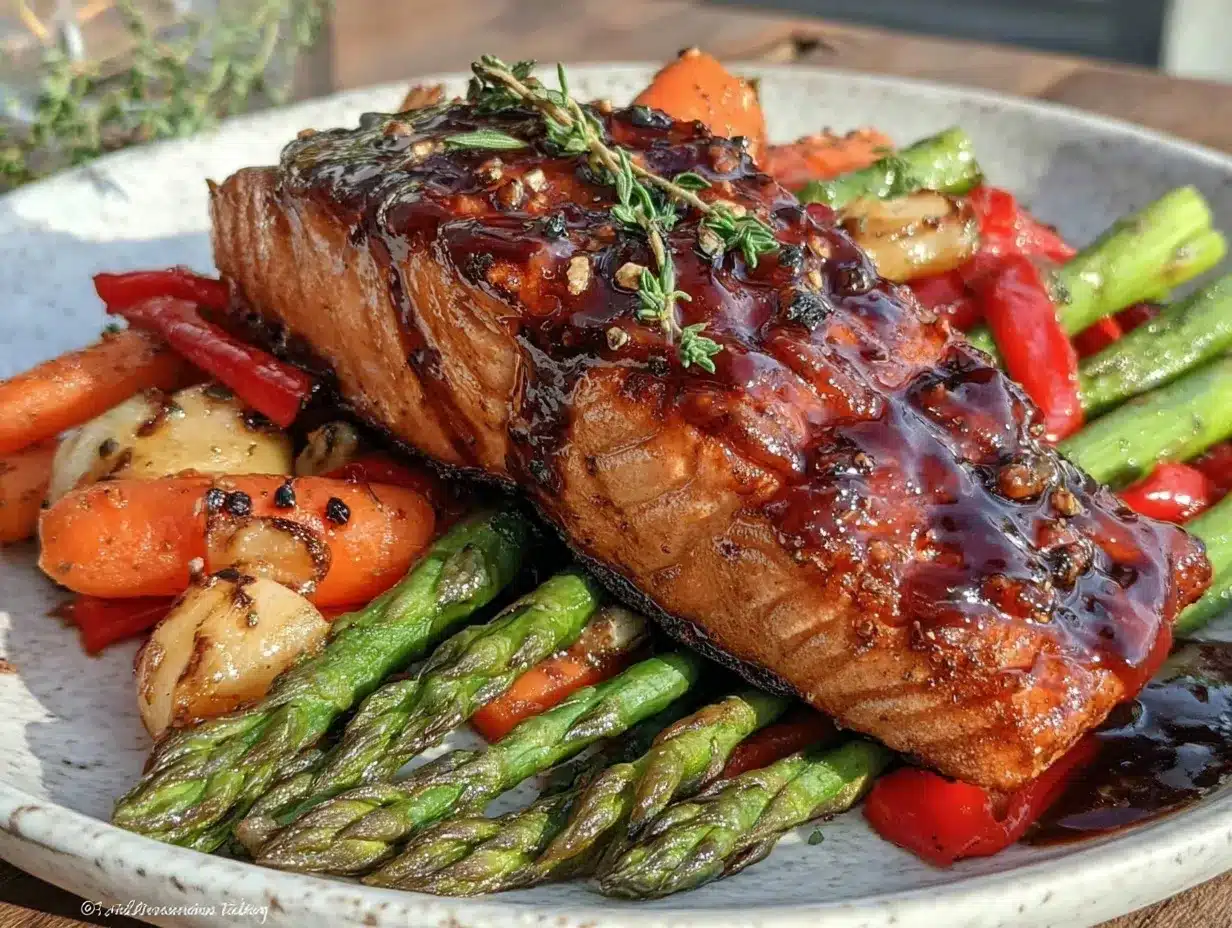
- Preheat your oven to 425°F (220°C). This high heat is perfect for roasting vegetables to caramelized perfection while cooking the salmon gently.
- Prepare the vegetables: In a large bowl, toss the halved baby potatoes, carrot sticks, and sliced bell peppers with 2 tablespoons of olive oil, chopped thyme, salt, and pepper. Spread them evenly on your baking sheet. Roast for about 20 minutes.
- Make the balsamic glaze: While the veggies roast, combine balsamic vinegar, honey, Dijon mustard, and minced garlic in a small saucepan. Bring to a simmer over medium heat, stirring frequently. Let it reduce until thickened and glossy – about 8-10 minutes. Be careful not to burn it; it should coat the back of a spoon.
- Prepare the salmon: Pat salmon fillets dry with paper towels (this helps with browning). Season both sides lightly with salt and pepper. After the vegetables have roasted 20 minutes, make space on the baking sheet for the salmon fillets, skin-side down.
- Glaze and roast salmon: Brush each fillet generously with the balsamic glaze, reserving some for serving. Return to the oven and roast everything together for another 12-15 minutes, until the salmon flakes easily with a fork and the vegetables are tender and caramelized.
- Final touches: Remove from oven. Let the salmon rest for a couple of minutes, then drizzle with any remaining glaze and a squeeze of fresh lemon if desired. Serve the roasted vegetables alongside.
Tips: Watch the glaze closely as it simmers; it can go from perfect to burnt quickly. If your veggies start browning too fast, tent the baking sheet with foil. For a crispier skin, you can sear the salmon skin-side down in a hot pan for 2 minutes before roasting.
Cooking Tips & Techniques
Working with salmon and roasting vegetables can be simple, but a few tricks make all the difference. First, patting the salmon dry avoids steam and helps the skin crisp up. I learned this the hard way after ending up with soggy skin one evening (not fun!).
When making the balsamic glaze, keep the heat medium-low and stir frequently to get that perfect syrupy texture. If the glaze gets too thick, add a splash of water to loosen it up. Also, try not to overcoat the salmon with glaze before roasting, or the sugars might burn and taste bitter.
Roasting veggies at 425°F (220°C) creates a lovely caramelization, but keep an eye on smaller pieces like carrots — they cook faster than potatoes. I usually cut carrots thicker to avoid overcooking. Tossing the veggies halfway through roasting helps them brown evenly, which is something I always forget and then scramble to fix (been there?).
Timing is key: start roasting your vegetables first, then add the salmon later so everything finishes together. This way, you avoid overcooked fish or underdone veggies. Multitasking like this saves time and keeps the flavors fresh and distinct.
Variations & Adaptations
- Seasonal Veggie Swap: In spring or summer, swap the potatoes and carrots for asparagus, cherry tomatoes, or zucchini. Roast times may vary, so watch for tenderness.
- Spicy Kick: Add a pinch of red pepper flakes to the balsamic glaze to give it some heat. I tried this once on a whim, and it really woke up the flavor without overpowering the salmon.
- Low-Sugar Option: Use a sugar-free sweetener like erythritol or simply reduce the honey to 1 tablespoon for those watching sugar intake.
- Gluten-Free & Dairy-Free: This recipe is naturally gluten-free and dairy-free, which makes it great for many diets.
- Alternative Cooking Methods: Try pan-searing the salmon first to get a crisp skin, then finishing it in the oven with the veggies. Or, grill the salmon and veggies for a smoky twist on the glaze.
Serving & Storage Suggestions
This balsamic glazed salmon with roasted vegetables is best served warm, right out of the oven. Present it on a large platter with lemon wedges for an inviting table. A light side salad or crusty bread pairs wonderfully if you want to round out the meal.
Leftovers keep well in the fridge for up to 2 days, stored in an airtight container. To reheat, gently warm the salmon and veggies in a 350°F (175°C) oven for about 10 minutes to keep the glaze from becoming sticky or burnt in the microwave.
Pro tip: the flavors actually deepen overnight as the balsamic glaze mingles with the salmon and vegetables. So, if you have time, let leftovers sit overnight before reheating — it tastes even better.
Nutritional Information & Benefits
This dish offers a balanced nutritional profile. Salmon is an excellent source of omega-3 fatty acids, which support heart and brain health. Roasted vegetables add fiber, vitamins A and C, and antioxidants that help keep your immune system happy.
Each serving provides roughly 350-400 calories, depending on portion size, with moderate protein and healthy fats. The balsamic glaze adds flavor without excess calories or artificial ingredients.
Gluten-free and dairy-free naturally, this recipe fits many dietary needs. Just watch the honey if you are managing sugar intake. Overall, it’s a nutrient-rich, satisfying meal that feels indulgent but keeps wellness in mind.
Conclusion
Flavorful balsamic glazed salmon with roasted vegetables is one of those recipes that feels both effortless and special. I keep making it because it checks all the boxes: it’s fast, uses simple ingredients, and tastes like you put in way more effort than you actually did. Honestly, the sticky-sweet glaze combined with tender salmon and caramelized veggies hits a sweet spot that’s hard to beat.
Feel free to customize it your way — swap veggies, add heat, or adjust sweetness. Cooking should be fun and forgiving, and this recipe lets you do just that. If you try it out, I’d love to hear which variation you liked best or any tweaks you made.
Don’t forget to share your experience or ask questions below — cooking is better when we share the journey. Here’s to many delicious dinners ahead!
FAQs
Can I use frozen salmon for this recipe?
Yes, but make sure to fully thaw and pat it dry before cooking to avoid excess moisture and soggy skin.
What vegetables work best with this balsamic glaze?
Root vegetables like carrots and potatoes are great, but peppers, zucchini, and asparagus also roast beautifully with this glaze.
How do I know when the salmon is cooked?
The salmon flakes easily with a fork and is opaque throughout. Cooking usually takes about 12-15 minutes at 425°F (220°C).
Can I prepare the balsamic glaze ahead of time?
Absolutely! Make it up to two days in advance and store in the fridge. Warm gently before using.
What if I don’t have Dijon mustard?
You can omit it or replace it with a teaspoon of whole grain mustard or a little mustard powder for a similar tang.
Pin This Recipe!
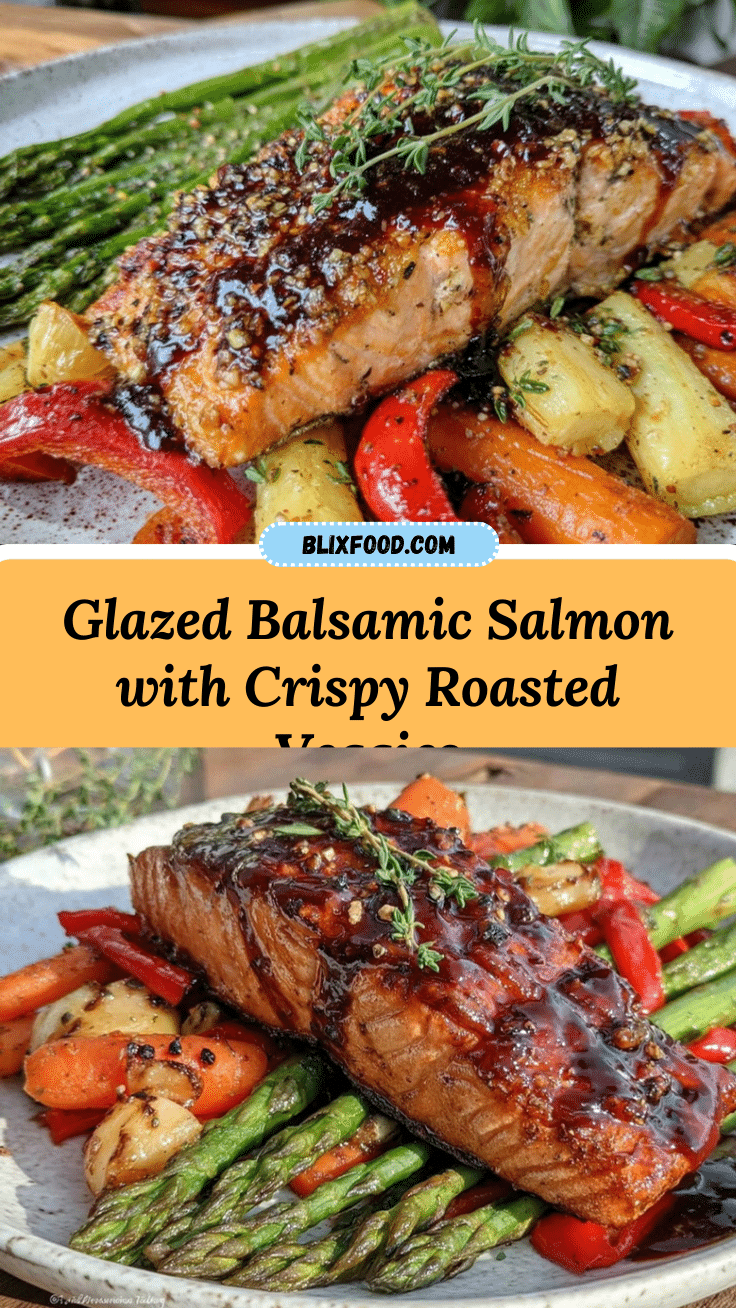
Flavorful Balsamic Glazed Salmon with Easy Roasted Vegetables
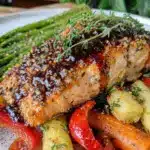
A quick and easy recipe featuring wild-caught salmon fillets glazed with a sweet and tangy balsamic reduction, served alongside perfectly roasted baby potatoes, carrots, and bell peppers.
- Prep Time: 10 minutes
- Cook Time: 35 minutes
- Total Time: 45 minutes
- Yield: 4 servings 1x
- Category: Main Course
- Cuisine: American
Ingredients
- 4 salmon fillets (skin-on, about 6 oz / 170 g each)
- ½ cup balsamic vinegar (120 ml)
- 2 tablespoons honey
- 1 tablespoon Dijon mustard
- 2 cloves garlic, minced
- 3 tablespoons extra virgin olive oil
- 1 pound baby potatoes, halved (450 g)
- 3 medium carrots, peeled and cut into sticks
- 2 bell peppers (red and yellow), sliced
- 1 tablespoon fresh thyme, chopped
- Salt and black pepper, to taste
- 1 lemon, cut into wedges (optional)
Instructions
- Preheat your oven to 425°F (220°C).
- In a large bowl, toss the halved baby potatoes, carrot sticks, and sliced bell peppers with 2 tablespoons of olive oil, chopped thyme, salt, and pepper. Spread them evenly on a rimmed baking sheet.
- Roast the vegetables for about 20 minutes.
- While the vegetables roast, combine balsamic vinegar, honey, Dijon mustard, and minced garlic in a small saucepan. Bring to a simmer over medium heat, stirring frequently. Let it reduce until thickened and glossy, about 8-10 minutes. Be careful not to burn it.
- Pat salmon fillets dry with paper towels and season both sides lightly with salt and pepper.
- After the vegetables have roasted for 20 minutes, make space on the baking sheet and place the salmon fillets skin-side down.
- Brush each fillet generously with the balsamic glaze, reserving some for serving.
- Return the baking sheet to the oven and roast everything together for another 12-15 minutes, until the salmon flakes easily with a fork and the vegetables are tender and caramelized.
- Remove from oven and let the salmon rest for a couple of minutes.
- Drizzle with any remaining glaze and a squeeze of fresh lemon if desired. Serve the roasted vegetables alongside.
Notes
Watch the balsamic glaze closely while simmering to avoid burning. If vegetables brown too quickly, tent the baking sheet with foil. For crispier salmon skin, sear skin-side down in a hot pan for 2 minutes before roasting. Leftovers keep well refrigerated for up to 2 days and taste better after flavors meld overnight.
Nutrition
- Serving Size: 1 salmon fillet with
- Calories: 375
- Sugar: 8
- Sodium: 220
- Fat: 18
- Saturated Fat: 3
- Carbohydrates: 22
- Fiber: 4
- Protein: 32
Keywords: balsamic glazed salmon, roasted vegetables, easy salmon recipe, healthy dinner, quick weeknight meal, balsamic glaze, honey mustard glaze, salmon with vegetables