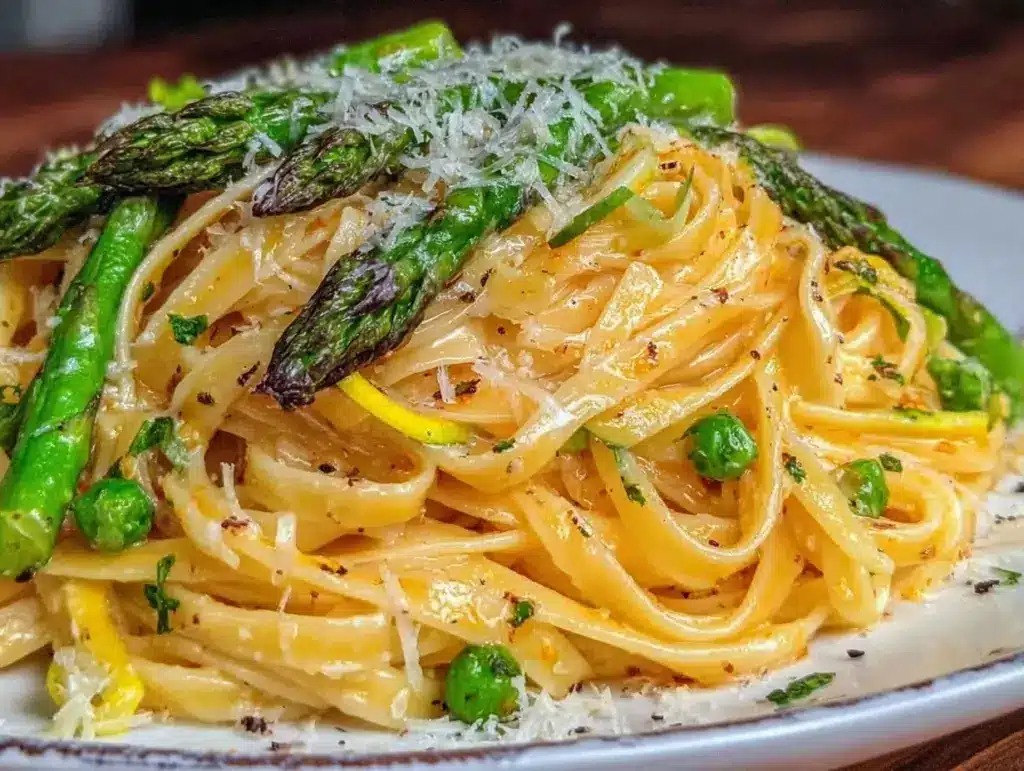
“I wasn’t expecting a cooking tip from my neighbor, Mrs. Lin, of all people,” I said, watching her expertly toss a handful of fresh peas into a sizzling pan. It was a Saturday afternoon in early April, and the scent of garlic sizzling in butter pulled me right into her kitchen. She was making this simple yet vibrant spring vegetable pasta, and honestly, it smelled like sunshine on a plate. I had stopped by to borrow a cup of sugar but left with a recipe that’s been haunting my taste buds in the best way possible ever since.
Sometimes, the best dishes come from those casual moments—the ones where you’re not expecting much but get hit with a whirlwind of flavor and nostalgia. This fresh garlic butter spring vegetable pasta with parmesan is exactly that kind of dish. It’s bright, comforting, and just the right balance of buttery richness and garden-fresh crispness. I mean, who ever thought that a handful of peas, asparagus, and tender pasta could feel so indulgent?
Maybe you’ve been there, craving something fresh but quick to make. I can tell you, this recipe has saved my lazy Sunday afternoons more times than I care to admit—especially when the pantry is half-empty and the fridge holds just a few spring veggies. Plus, the parmesan topping? That’s the kind of simple luxury that makes you close your eyes after the first bite and whisper, “Yep, I’ll take that again, please.”
Why You’ll Love This Recipe
After testing this recipe through several weekends and tweaking it to near perfection, here’s why it’s become a staple in my kitchen:
- Quick & Easy: Ready in under 30 minutes, perfect for those busy weeknights or when you want something satisfying without fuss.
- Simple Ingredients: Uses everyday pantry staples and fresh spring veggies you can find at local markets or even your backyard garden.
- Perfect for Spring: The fresh, crisp veggies celebrate the season beautifully, making it an ideal brunch or light dinner.
- Crowd-Pleaser: Family and friends always ask for seconds — and the kids love the buttery garlic flavor.
- Unbelievably Delicious: The combination of silky garlic butter sauce and sharp, nutty parmesan creates a mouthwatering harmony.
This isn’t just another pasta recipe. The secret is in the garlic butter base, gently cooked to bring out sweetness without burning, and the way the parmesan is folded in at the end for creamy richness rather than just sprinkled on top. I also love how the spring veggies stay bright and crisp, giving texture that contrasts perfectly with the tender pasta. Honestly, it feels like comfort food that’s been given a fresh, green twist.
Whether you’re trying to impress guests without breaking a sweat or just want a quick, wholesome meal, this recipe has you covered. And if you’re like me, you might find yourself making it on lazy Sunday afternoons — again and again.
What Ingredients You Will Need
This fresh garlic butter spring vegetable pasta recipe relies on simple, wholesome ingredients that come together to deliver bold flavor and a satisfying texture without any complicated steps. Most are pantry staples or easy-to-find fresh produce, so no special trips required!
- Pasta: 8 ounces (225 grams) of fettuccine or linguine – I prefer Barilla brand for its perfect al dente texture.
- Butter: 4 tablespoons (60 grams), unsalted and softened – this is the base for the luscious garlic butter sauce.
- Fresh garlic: 4 large cloves, finely minced – the star flavor that infuses everything.
- Spring vegetables:
- 1 cup (150 grams) fresh peas – sweet and tender, they pop with freshness.
- 1 cup (130 grams) asparagus tips, trimmed and cut into 2-inch pieces – adds a delightful crunch and earthiness.
- 1/2 cup (75 grams) thinly sliced green beans – optional but highly recommended for texture.
- Lemon juice: 1 tablespoon, freshly squeezed – adds brightness and balances the richness.
- Parmesan cheese: 3/4 cup (75 grams), freshly grated – I always use Parmigiano-Reggiano for that authentic nutty flavor.
- Salt and freshly ground black pepper: to taste – crucial for seasoning every layer.
- Olive oil: 1 tablespoon – to lightly sauté the veggies before adding the butter.
- Fresh herbs (optional): A tablespoon of chopped basil or parsley for garnish – adds a fresh, herbal note.
If you can’t find fresh peas, frozen works just as well — just thaw them beforehand. For a dairy-free version, swap the butter with vegan margarine and use a plant-based parmesan alternative. And if you want to make it gluten-free, a good quality gluten-free pasta will do the trick without sacrificing taste.
Equipment Needed
- Large pot: For boiling pasta – a 6-quart (5.7 liters) pot works well.
- Large skillet or sauté pan: At least 12 inches (30 cm) in diameter to cook the garlic butter sauce and spring vegetables evenly.
- Colander: To drain pasta efficiently without losing any precious noodles.
- Microplane or fine grater: For grating fresh parmesan cheese – it makes a world of difference compared to pre-grated.
- Wooden spoon or silicone spatula: For stirring gently without scratching your pans.
- Citrus juicer (optional): To get the most juice from your lemon without seeds.
If you don’t have a sauté pan, a regular frying pan will do, just watch your heat so the garlic doesn’t burn. For budget-friendly options, a basic stainless steel pot and wooden spoon can handle everything perfectly. I once had to improvise with a big saucepan and a fork—worked just fine, but having the right tools definitely speeds things up!
Preparation Method
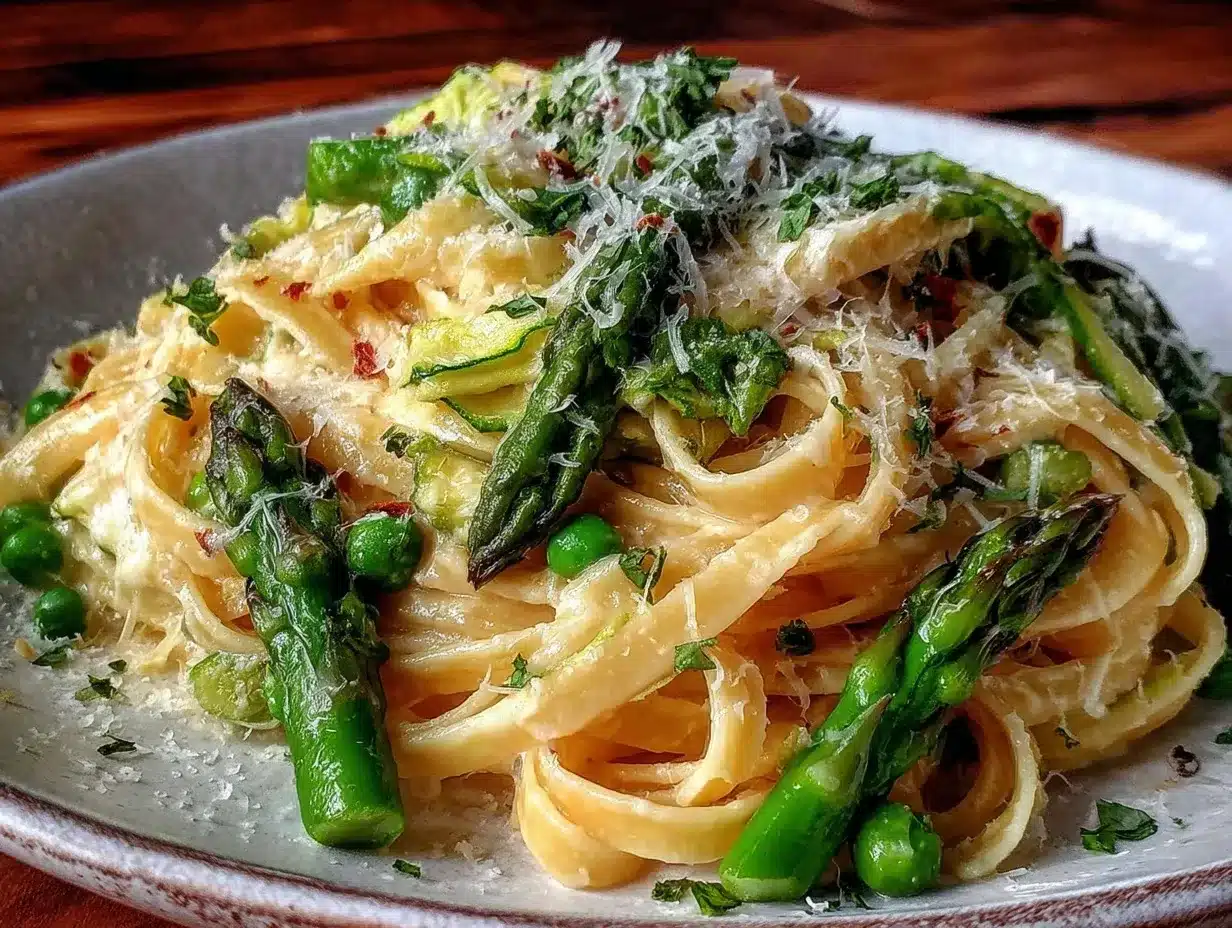
- Bring a large pot of salted water to a boil. Add about 1 tablespoon of salt to the water—this seasons the pasta from within. Cook the fettuccine or linguine for 9 to 11 minutes, until al dente, according to package instructions. Reserve about 1 cup (240 ml) of pasta water before draining.
- While the pasta cooks, prepare the vegetables. Rinse the peas, trim and cut the asparagus into 2-inch pieces, and slice the green beans thinly if using. This usually takes about 5 minutes. Have them ready to go before moving on.
- Heat 1 tablespoon of olive oil in a large skillet over medium heat. Add the asparagus and green beans first, sautéing for 3 to 4 minutes until they start to soften but remain crisp. Add the peas and cook for another 2 minutes. The veggies should be bright green and tender-crisp.
- Reduce heat to medium-low. Push the vegetables to the side and add the softened butter to the empty part of the skillet. Melt it gently, then add the minced garlic. Stir frequently for about 1 to 2 minutes until fragrant but not browned (burnt garlic tastes bitter, so keep an eye here!).
- Add the cooked pasta directly to the skillet. Toss everything together with the lemon juice, freshly grated parmesan, and some pasta water a little at a time to create a silky sauce that clings to the noodles. This step takes about 2 minutes. Season with salt and freshly ground black pepper to taste.
- Remove from heat and sprinkle with fresh herbs if using. Give everything a final gentle toss. The sauce should coat the pasta beautifully without being too thick or watery.
- Serve immediately. Plate the pasta and add an extra sprinkle of parmesan on top. If you’re anything like me, you’ll want to dig in right away while it’s warm and buttery.
If your garlic starts to brown too quickly in step 4, lower the heat or remove the pan from the burner briefly. And remember, reserving pasta water is a small trick that makes the sauce come together perfectly smooth, so don’t skip that!
Cooking Tips & Techniques
Let me share a few tips I’ve picked up after a handful of slightly charred garlic moments and under-seasoned pasta attempts:
- Garlic Butter Magic: Cook garlic low and slow in butter to coax out sweetness without bitterness. Once it starts smelling fragrant, don’t let it darken too much—this is your flavor sweet spot.
- Don’t Overcook Veggies: The peas and asparagus should remain crisp-tender. Overcooking makes them mushy and dulls their bright green color, which is part of the dish’s charm.
- Use Pasta Water Wisely: The starchy pasta water helps bind the sauce to the noodles. Add it gradually until you get a creamy, silky consistency.
- Season in Layers: Salt your pasta water, season the veggies lightly, then adjust at the end with salt and pepper. It’s easier to fix seasoning this way than trying to rescue a bland dish at the last second.
- Multitasking Tip: While pasta cooks, prep your veggies and garlic so everything comes together quickly. I often start heating the skillet just as the pasta goes into the water.
Honestly, the first time I made this, I forgot to reserve pasta water and ended up with a dry mess. Lesson learned! Also, don’t rush the garlic step—it’s the heart of the sauce and deserves your patience.
Variations & Adaptations
This recipe is pretty flexible, so feel free to make it your own with these ideas:
- Protein Boost: Add grilled chicken strips, sautéed shrimp, or crispy pancetta for a heartier meal.
- Seasonal Swap: In early summer, swap peas for fresh peas and asparagus for zucchini ribbons to keep it fresh and light.
- Dairy-Free Version: Use vegan butter and nutritional yeast instead of parmesan for a cheesy flavor without dairy.
- Spicy Kick: Toss in a pinch of red pepper flakes when cooking the garlic for a subtle heat that contrasts beautifully with the butter.
- Gluten-Free Option: Substitute the pasta with your favorite gluten-free noodles. I’ve tried brown rice pasta here, and it worked great without losing texture.
I once made this with lemon zest added right before serving, which gave it a lovely citrusy brightness. That little twist turned it into a favorite summer dinner at my house.
Serving & Storage Suggestions
This fresh garlic butter spring vegetable pasta is best served warm, straight from the pan when the butter sauce is silky and the parmesan is melting into every strand. I like to garnish with a few extra shavings of parmesan and a sprinkle of fresh herbs for color and freshness.
It pairs beautifully with a crisp green salad or crusty bread to soak up any leftover sauce. For beverages, a chilled glass of Sauvignon Blanc or a sparkling water with lemon complements the dish nicely.
Leftovers keep well in an airtight container in the refrigerator for up to 2 days. When reheating, add a splash of water or broth and warm gently on the stove or microwave to bring back that creamy texture. Avoid overheating, as the pasta can dry out quickly.
Fun fact: the flavors actually deepen a bit after a few hours, making it a great make-ahead option for busy days. Just reheat gently and add fresh parmesan to revive the dish.
Nutritional Information & Benefits
This garlic butter spring vegetable pasta offers a balanced mix of carbs, fats, and protein, making it a satisfying meal without feeling too heavy. Here’s a rough estimate per serving (serves 4):
| Calories | 420 |
|---|---|
| Carbohydrates | 55g |
| Protein | 15g |
| Fat | 15g |
| Fiber | 6g |
The fresh spring veggies provide fiber and vitamins like A and C, while garlic has natural antioxidants and anti-inflammatory properties. Parmesan adds calcium and protein, too. For those watching carbs, swapping regular pasta for a lower-carb alternative can make this dish fit a variety of diets.
Personally, I appreciate that this recipe feels indulgent but still respects wholesome ingredients and seasonal freshness. It’s a simple way to enjoy comfort food with a bit of a health-conscious nod.
Conclusion
This fresh garlic butter spring vegetable pasta with parmesan is one of those dishes that feels both effortless and special. It’s a recipe that’s stayed with me because it’s quick to pull together, uses ingredients I almost always have on hand, and delivers a comforting yet fresh flavor experience. You can easily tweak it to suit your tastes or dietary needs, making it a reliable go-to for a fuss-free meal.
Honestly, I love how this recipe brings a little bit of springtime into my kitchen, no matter the weather outside. I hope it finds a spot in your recipe box too—maybe even as a quick fix for those days when you want something simple but satisfying. If you try it out, I’d love to hear how you make it your own. Drop a comment or share your twists—I’m always excited to see how this dish grows in different kitchens!
Happy cooking, and here’s to many buttery, garlicky, veggie-filled pasta nights ahead!
FAQs
Can I use frozen vegetables instead of fresh for this pasta?
Yes! Frozen peas and asparagus work well once thawed and drained. Just be careful not to overcook them to avoid mushiness.
What type of pasta works best for this recipe?
Fettuccine or linguine are ideal as they hold the garlic butter sauce nicely, but spaghetti or even penne can be good substitutes depending on what you have.
How can I store leftovers to keep the pasta from drying out?
Store in an airtight container in the fridge for up to 2 days. When reheating, add a splash of water or broth and warm gently to restore creaminess.
Can I make this dish vegan?
Absolutely! Use vegan butter and a plant-based parmesan substitute or nutritional yeast to mimic the cheesy flavor.
Is it okay to prepare the sauce in advance?
The sauce is best fresh, but you can prep the garlic butter and veggies ahead of time and gently reheat with the pasta just before serving for convenience.
Pin This Recipe!
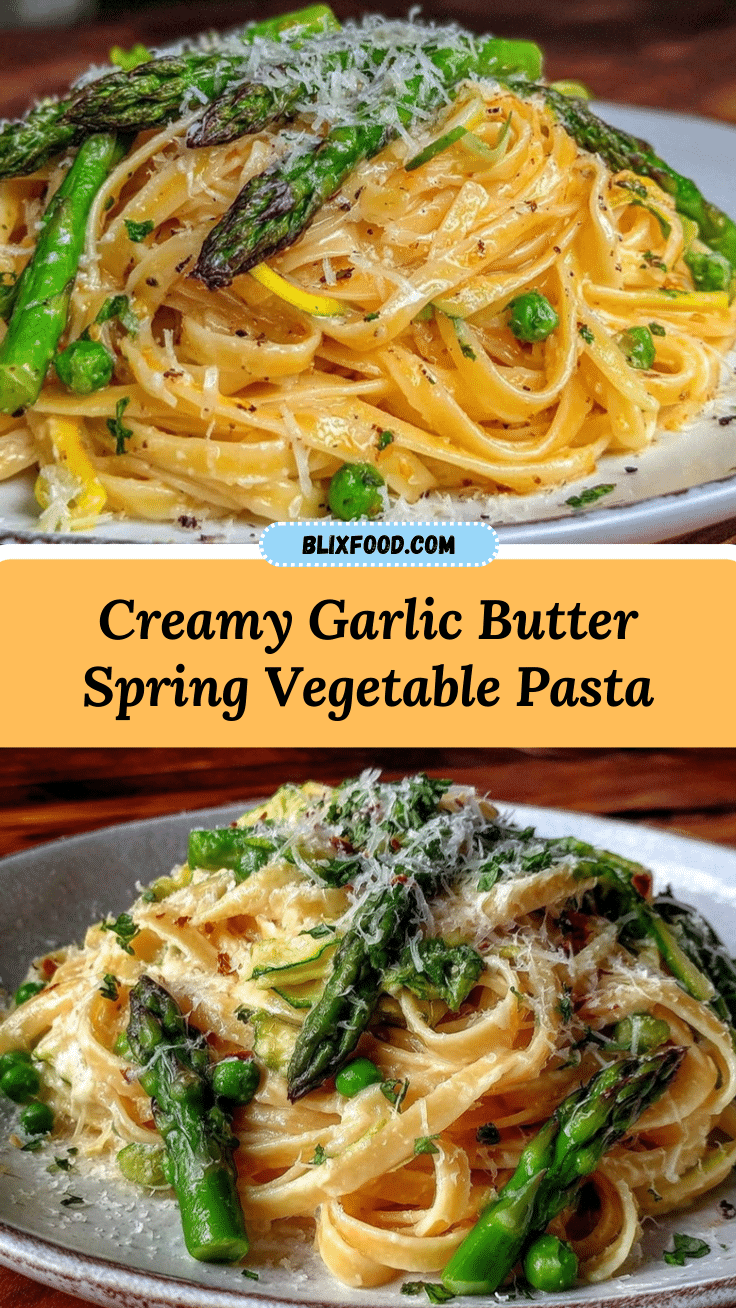
Fresh Garlic Butter Spring Vegetable Pasta
A quick and easy pasta dish featuring fresh spring vegetables sautéed in a silky garlic butter sauce, finished with freshly grated parmesan for a bright and comforting meal.
- Prep Time: 10 minutes
- Cook Time: 15 minutes
- Total Time: 25 minutes
- Yield: 4 servings 1x
- Category: Main Course
- Cuisine: Italian
Ingredients
- 8 ounces (225 grams) fettuccine or linguine pasta
- 4 tablespoons (60 grams) unsalted butter, softened
- 4 large cloves fresh garlic, finely minced
- 1 cup (150 grams) fresh peas
- 1 cup (130 grams) asparagus tips, trimmed and cut into 2-inch pieces
- 1/2 cup (75 grams) thinly sliced green beans (optional)
- 1 tablespoon freshly squeezed lemon juice
- 3/4 cup (75 grams) freshly grated parmesan cheese
- Salt and freshly ground black pepper, to taste
- 1 tablespoon olive oil
- 1 tablespoon chopped fresh basil or parsley (optional)
Instructions
- Bring a large pot of salted water to a boil. Add about 1 tablespoon of salt to the water. Cook the fettuccine or linguine for 9 to 11 minutes, until al dente, according to package instructions. Reserve about 1 cup (240 ml) of pasta water before draining.
- While the pasta cooks, rinse the peas, trim and cut the asparagus into 2-inch pieces, and slice the green beans thinly if using.
- Heat 1 tablespoon of olive oil in a large skillet over medium heat. Add the asparagus and green beans first, sautéing for 3 to 4 minutes until they start to soften but remain crisp. Add the peas and cook for another 2 minutes until bright green and tender-crisp.
- Reduce heat to medium-low. Push the vegetables to the side and add the softened butter to the empty part of the skillet. Melt it gently, then add the minced garlic. Stir frequently for about 1 to 2 minutes until fragrant but not browned.
- Add the cooked pasta directly to the skillet. Toss everything together with the lemon juice, freshly grated parmesan, and some reserved pasta water a little at a time to create a silky sauce that clings to the noodles. Season with salt and freshly ground black pepper to taste.
- Remove from heat and sprinkle with fresh herbs if using. Give everything a final gentle toss.
- Serve immediately with an extra sprinkle of parmesan on top.
Notes
Cook garlic low and slow in butter to avoid bitterness. Reserve pasta water to create a silky sauce. Do not overcook vegetables to keep them crisp-tender. For dairy-free, use vegan butter and plant-based parmesan. Gluten-free pasta can be substituted as needed.
Nutrition
- Serving Size: 1 serving (about 1/4
- Calories: 420
- Fat: 15
- Carbohydrates: 55
- Fiber: 6
- Protein: 15
Keywords: garlic butter pasta, spring vegetable pasta, easy pasta recipe, parmesan pasta, quick dinner, fresh peas, asparagus pasta