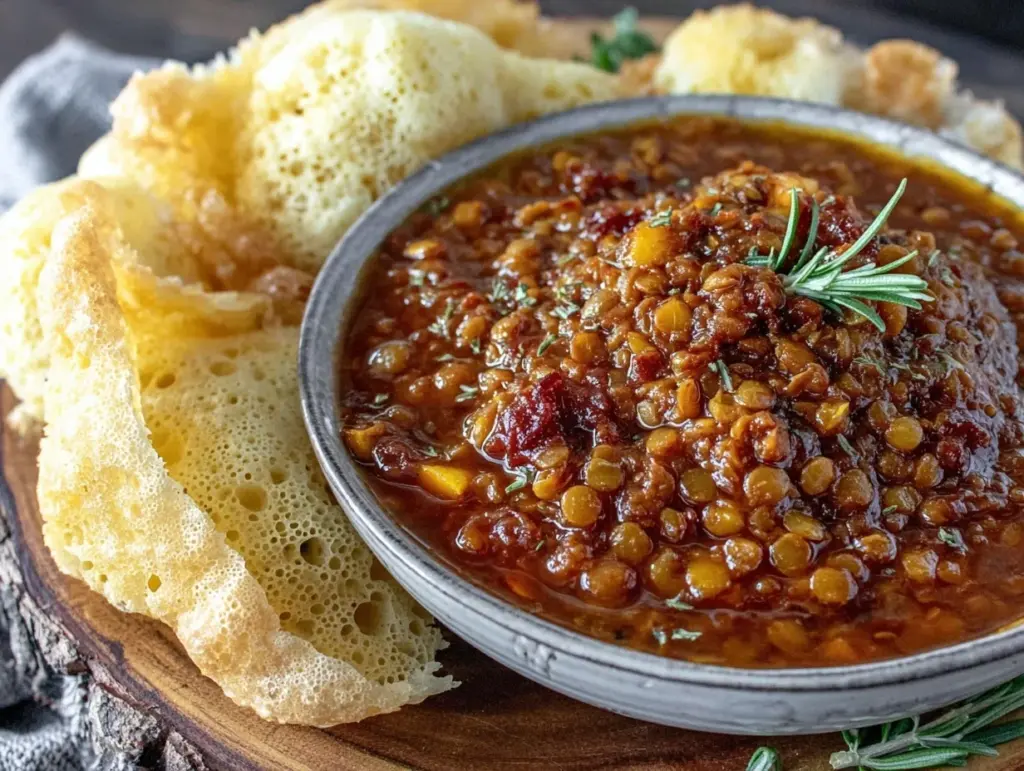
“You really have to try this lentil stew,” my coworker said, sliding a steaming plate across the lunch table one afternoon. Honestly, I was skeptical—red lentils and a stew? I’d always thought of lentils as something dull, maybe a side dish at best. But the rich aroma of berbere spices filled the air, catching me off guard. That moment was the start of my slow obsession with Ethiopian Misir Wot, this flavorful red lentil stew that somehow manages to be both deeply comforting and vibrant with heat.
I remember sitting there, spooning the stew, its thick, almost velvety texture clinging to the injera—the spongy, sour flatbread that’s both utensil and partner to the dish. The way the spices wrapped around the lentils, the gentle tang of the injera, it was unlike any stew I’d tried before. That lunch turned into several meals that week, each time I found myself tweaking the spice levels or swapping in fresh tomatoes for canned. It’s one of those dishes where you don’t just eat it—you sort of savor the culture, the history, and the care that goes into every bite.
There’s something quietly grounding about cooking and sharing Misir Wot. Maybe it’s the way the stew thickens slowly, or how the injera invites you to eat with your hands, slowing you down. Whatever it is, this recipe stuck with me—not because it’s flashy, but because it’s honest, hearty, and just so flavorful in a way that feels like a warm hug after a long day.
Why You’ll Love This Recipe
Having made this Flavorful Ethiopian Misir Wot Red Lentil Stew with Injera more times than I can count, I can say it’s truly a weeknight game changer. Here’s why it’s become a staple in my kitchen:
- Quick & Easy: Ready in about 40 minutes, it’s perfect for nights when you want something hearty without hours in the kitchen.
- Simple Ingredients: No need to hunt down exotic items—the recipe mainly calls for pantry staples and a few Ethiopian essentials like berbere spice.
- Perfect for Cozy Dinners: Whether it’s a quiet solo meal or a shared feast, Misir Wot pairs beautifully with injera to bring everyone to the table.
- Crowd-Pleaser: I’ve served this to friends who aren’t typically adventurous eaters, and they always ask for seconds.
- Unbelievably Delicious: The slow-cooked lentils soak up the spices, resulting in a rich, layered flavor you won’t find in your average stew.
What really sets this version apart is the balance between the smoky, spicy berbere and the natural sweetness of sautéed onions and garlic. Plus, I like to toast the spices briefly before adding liquids, which unlocks their full aroma. It’s not just another lentil stew—it’s an experience that feels both exotic and approachable.
Eating this dish is like getting a little taste of Ethiopian hospitality right in your own kitchen. It’s food that comforts and excites your palate at the same time, and that’s why it’s stuck with me.
What Ingredients You Will Need
This recipe uses simple, wholesome ingredients to deliver bold flavor and satisfying texture without the fuss. Most are pantry staples, with a couple of special touches that make all the difference.
- Red Lentils (1 cup / 200 g) – The star of the stew, these cook quickly and give a lovely creamy texture.
- Yellow or Brown Onions (2 medium, finely chopped) – They form the stew’s sweet and savory base.
- Garlic Cloves (3 large, minced) – Adds depth and warmth.
- Ginger (1 tablespoon, minced) – Fresh ginger brings a subtle zing that complements the spices.
- Berbere Spice Blend (2 tablespoons) – This Ethiopian spice mix is essential. It has chili, paprika, fenugreek, and more. I recommend buying from a specialty store or making your own for freshness.
- Tomato Paste (2 tablespoons) – Adds richness and a slight tang.
- Vegetable Broth or Water (3 cups / 720 ml) – For cooking the lentils and building the stew base.
- Olive Oil or Niter Kibbeh (3 tablespoons) – Traditional Ethiopian spiced clarified butter (niter kibbeh) adds authentic flavor, but olive oil works great if you can’t find it.
- Salt (to taste) – Enhances all the flavors.
- Fresh Lemon Juice (optional, 1 tablespoon) – Brightens the stew at the end.
- Injera (store-bought or homemade) – The sourdough flatbread that’s key for serving. If you want to make your own, it’s a fun project, but good-quality store-bought injera works perfectly.
Feel free to substitute almond flour or gluten-free injera if you’re catering to dietary needs. Also, in the summer, I like adding fresh diced tomatoes instead of tomato paste for a lighter version.
Equipment Needed
- Medium-sized heavy-bottomed pot or Dutch oven: Ideal for even heat distribution, which helps the lentils cook evenly without burning.
- Wooden spoon or spatula: For stirring the stew gently as it thickens.
- Knife and cutting board: For prepping onions, garlic, and ginger.
- Measuring cups and spoons: To get your spice ratios just right.
- Fine mesh strainer: Handy if you want to rinse the lentils before cooking.
- Optional: non-stick skillet for toasting spices or warming injera.
If you don’t have a Dutch oven, a heavy saucepan with a lid will do just fine. I’ve also used a cast iron skillet for the initial onion sauté and then transferred everything to a pot to simmer.
Preparation Method
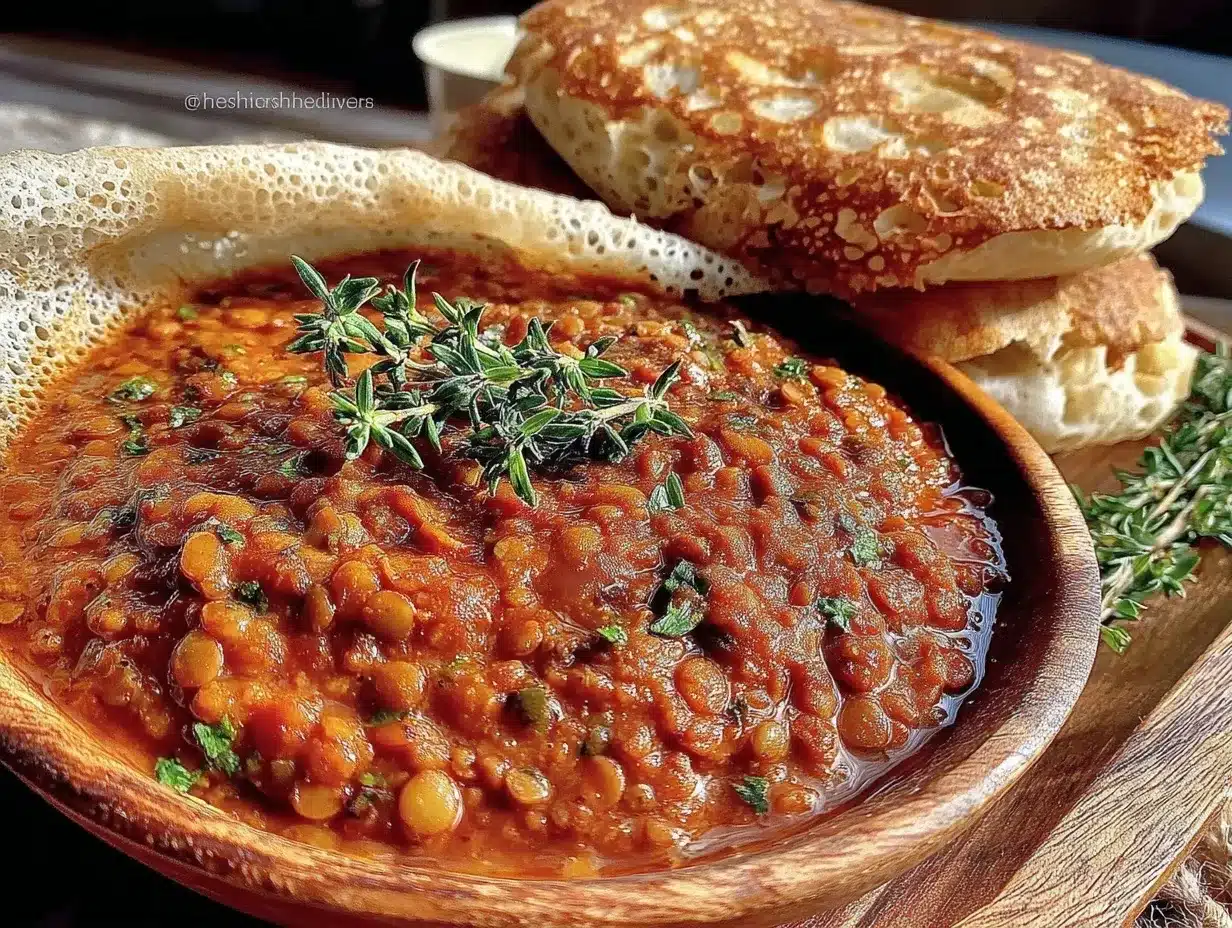
- Rinse the lentils: Place 1 cup (200 g) of red lentils in a fine mesh strainer and rinse under cold water until the water runs clear. This removes excess starch and prevents clumping. Drain thoroughly.
- Sauté the aromatics: Heat 3 tablespoons of olive oil or niter kibbeh in your pot over medium heat. Add the finely chopped onions (2 medium) and cook for 10-12 minutes, stirring often, until they turn golden and soft. This slow caramelization builds the stew’s base.
- Add garlic and ginger: Stir in 3 minced garlic cloves and 1 tablespoon of minced ginger. Cook for another 2 minutes until fragrant, but don’t let them brown or burn.
- Toast the berbere spice: Sprinkle in 2 tablespoons of berbere spice blend. Stir constantly for 1-2 minutes to release the spices’ aroma—this little step makes a huge difference, trust me.
- Incorporate the tomato paste: Add 2 tablespoons of tomato paste and stir well. Cook for 2-3 minutes to mellow the acidity and deepen the flavor.
- Add lentils and liquid: Pour in the rinsed lentils and 3 cups (720 ml) of vegetable broth or water. Stir to combine everything evenly.
- Simmer: Bring to a boil, then reduce the heat to low. Cover partially with a lid and let it simmer gently for 25-30 minutes, stirring occasionally. The lentils will soften and the stew will thicken to a rich, dense consistency.
- Season and finish: Add salt to taste and a squeeze of fresh lemon juice if desired. Adjust seasoning as you go—this stew loves bold flavors.
- Prepare the injera: If using store-bought, warm the injera in a dry skillet or microwave wrap briefly in a damp cloth to make it pliable.
- Serve: Spoon the warm Misir Wot onto the injera, tearing off pieces to scoop up the stew. Enjoy the mix of spicy, tangy, and earthy flavors.
Pro tip: If the stew gets too thick, add a splash of water or broth to loosen it up. And don’t rush the onion sauté—those golden bits bring the stew alive.
Cooking Tips & Techniques
One thing I learned early on is that patience is key for this Ethiopian red lentil stew. Those onions need time to caramelize properly—that’s where the magic starts. Rushing this step means missing out on the stew’s deep sweetness that balances the berbere’s heat.
Also, toasting the berbere spice right in the pot wakes up the flavors in a way that just tossing it in won’t achieve. I usually keep a little extra berbere on hand to sprinkle on top for added kick.
Watch your liquid levels carefully. Red lentils cook fast and soak up liquid quickly. If you leave the pot unattended, you might end up with lentil glue (which, honestly, is tasty but not the texture you want here).
When it comes to serving, tearing injera with your hands and dipping it into the stew is the traditional and best way to enjoy it. If you’re not used to eating with injera, it might feel a little messy at first, but it’s super satisfying once you get the hang of it.
Lastly, don’t be afraid to taste as you go. A little salt or a splash of acidity can brighten the whole pot and make the flavors pop.
Variations & Adaptations
This Ethiopian Misir Wot stew is versatile and invites tweaks based on what you have or prefer. Here are some variations I’ve played with:
- Spice Level: Adjust the amount of berbere spice to your heat tolerance. For a milder version, halve it and add smoked paprika for warmth without the burn.
- Protein Boost: Add cubed tofu or cooked chicken pieces for a heartier meal. Just stir them in near the end to heat through.
- Vegetable Additions: Toss in diced carrots or spinach during the last 10 minutes of simmering to add color and nutrition.
- Cooking Method: You can also make this in a slow cooker. Sauté the onions and spices first, then combine everything and cook on low for 4-6 hours.
- Allergen-Friendly: For a gluten-free option, serve with gluten-free flatbreads or rice instead of injera.
One personal twist I love is stirring in a spoonful of plain Greek yogurt on top for creaminess and cooling contrast. It’s not traditional, but it’s a fun fusion I stumbled upon when craving something tangy.
Serving & Storage Suggestions
Misir Wot is best served warm, right off the stove, with fresh injera. The sour tang of the injera perfectly cuts through the stew’s rich, spicy notes. For an authentic experience, serve it family-style on a large platter with several injera rounds underneath, allowing everyone to dig in with their hands.
If you want to round out the meal, Ethiopian dishes like fresh shrimp salad with creamy herb dressing or simple vegetable sides complement the stew’s boldness beautifully.
Leftovers keep well in an airtight container in the fridge for up to 3 days. The flavors deepen overnight, making the stew even tastier the next day. Reheat gently on the stove, adding a splash of water or broth to loosen the stew if needed.
You can freeze the stew for up to 2 months—just thaw overnight in the fridge and reheat slowly. Injera doesn’t freeze well, so it’s best served fresh.
Nutritional Information & Benefits
This Ethiopian Misir Wot Red Lentil Stew is not only flavorful but packs a nutritious punch. A typical serving provides approximately:
| Calories | 280 kcal |
|---|---|
| Protein | 18 g |
| Carbohydrates | 40 g |
| Fiber | 15 g |
| Fat | 8 g |
Lentils are a fantastic plant-based protein source and rich in fiber, which helps with digestion and sustained energy. The spices, especially turmeric and ginger in berbere, have anti-inflammatory properties. This recipe is naturally gluten-free when served without injera or with gluten-free injera alternatives, and it’s low in saturated fat.
From my experience, this meal feels nourishing without weighing you down, making it a great choice for anyone looking to eat wholesome, satisfying food without the heaviness.
Conclusion
This Ethiopian Misir Wot red lentil stew isn’t just another recipe—it’s a comforting, aromatic dish that invites you to slow down and enjoy the simple pleasures of food and sharing. Whether you’re cooking for yourself or a group, this recipe adapts beautifully and delivers layers of flavor that reward your patience.
Feel free to tweak the spice, add veggies, or pair it with your favorite sides. For me, it’s the kind of meal that sticks around in my rotation because it’s reliably delicious and surprisingly easy to make.
Give it a try, and I promise it’ll become a cozy favorite. And if you want to try other flavorful dishes that pair well with this, you might enjoy the crispy caraway twists for a crunchy side or the festive cranberry cream cheese spread to add a little sweet contrast at your next gathering.
FAQs
What is berbere spice, and can I substitute it?
Berbere is a traditional Ethiopian spice blend containing chili, paprika, fenugreek, ginger, and more. If you can’t find it, try mixing smoked paprika, cayenne, garlic powder, and ground ginger as a simple substitute.
Can I make Misir Wot vegan?
Absolutely! Just use olive oil instead of niter kibbeh (spiced butter), and the recipe is naturally vegan and delicious.
How do I store leftover Misir Wot?
Keep leftovers in an airtight container in the fridge for up to 3 days or freeze for up to 2 months. Reheat gently on the stove with a little water to loosen.
What can I serve instead of injera?
If injera isn’t available, try serving the stew over rice, quinoa, or with gluten-free flatbreads.
Is this recipe spicy?
It has a moderate heat level from the berbere spice, but you can adjust the amount to make it milder or spicier depending on your preference.
Pin This Recipe!
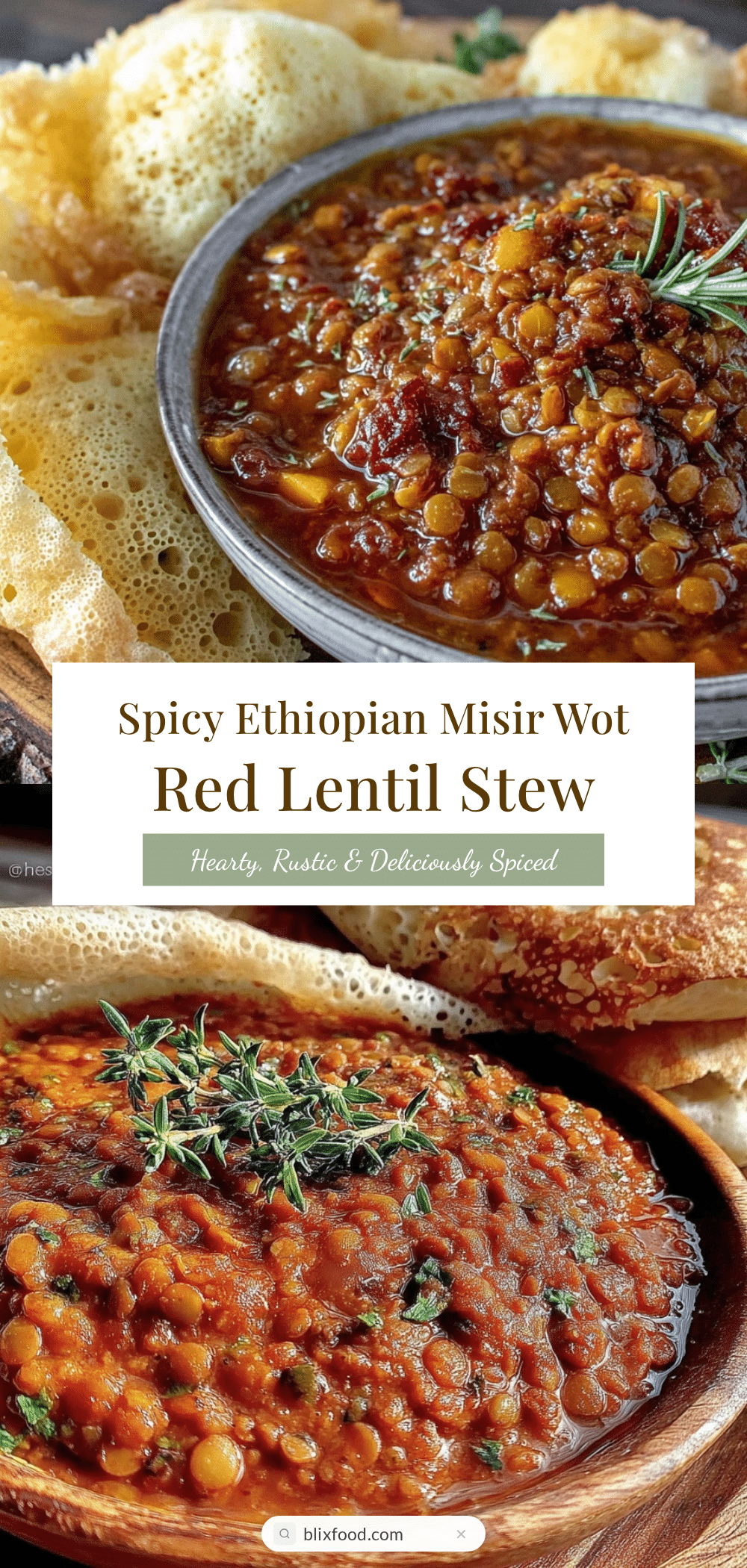
Flavorful Ethiopian Misir Wot Recipe Easy Red Lentil Stew with Injera

A deeply comforting and vibrant Ethiopian red lentil stew seasoned with berbere spices, served traditionally with injera flatbread.
- Prep Time: 15 minutes
- Cook Time: 30 minutes
- Total Time: 45 minutes
- Yield: 4 servings 1x
- Category: Main Course
- Cuisine: Ethiopian
Ingredients
- 1 cup (200 g) red lentils
- 2 medium yellow or brown onions, finely chopped
- 3 large garlic cloves, minced
- 1 tablespoon minced ginger
- 2 tablespoons berbere spice blend
- 2 tablespoons tomato paste
- 3 cups (720 ml) vegetable broth or water
- 3 tablespoons olive oil or niter kibbeh (Ethiopian spiced clarified butter)
- Salt to taste
- 1 tablespoon fresh lemon juice (optional)
- Injera (store-bought or homemade)
Instructions
- Rinse the lentils under cold water until the water runs clear and drain thoroughly.
- Heat olive oil or niter kibbeh in a medium heavy-bottomed pot over medium heat.
- Add finely chopped onions and cook for 10-12 minutes, stirring often, until golden and soft.
- Stir in minced garlic and ginger and cook for 2 minutes until fragrant, avoiding browning.
- Sprinkle in berbere spice blend and stir constantly for 1-2 minutes to release aroma.
- Add tomato paste and cook for 2-3 minutes to mellow acidity and deepen flavor.
- Add rinsed lentils and vegetable broth or water, stirring to combine.
- Bring to a boil, then reduce heat to low and simmer partially covered for 25-30 minutes, stirring occasionally until lentils are soft and stew thickens.
- Season with salt to taste and add fresh lemon juice if desired.
- Warm injera in a dry skillet or microwave wrapped in a damp cloth to make pliable.
- Serve the warm Misir Wot on injera, tearing pieces of injera to scoop the stew.
Notes
Toast the berbere spice briefly to unlock full aroma. Do not rush caramelizing onions for best flavor. Add water or broth if stew becomes too thick. Adjust spice level by varying berbere amount. Injera can be substituted with gluten-free flatbreads or rice. Leftovers keep well refrigerated for 3 days or frozen for up to 2 months.
Nutrition
- Serving Size: 1 serving (approxima
- Calories: 280
- Sugar: 4
- Sodium: 400
- Fat: 8
- Saturated Fat: 1
- Carbohydrates: 40
- Fiber: 15
- Protein: 18
Keywords: Ethiopian, Misir Wot, red lentil stew, berbere spice, injera, vegan, gluten-free option, easy weeknight dinner